Close a 1099 Mortgage in 15 to 30 Days: 90% Rule for U.S. Self Employed
· By the HomePilot team · Reviewed by a licensed loan officer · Company NMLS #2752340

Yes. If you earn income reported on IRS Form 1099, you can often qualify for a 1099 mortgage loan that uses your 1099s instead of tax returns. This is a non‑QM path built for freelancers, contractors, and gig workers whose gross 1099 income outpaces the net income shown after deductions. Expect about a year or two of 1099s, a standard expense factor applied to your gross earnings, and generally a higher rate or larger reserve requirement than a conventional loan.
TL;DR:
- Lenders typically use 90% of gross 1099 income divided by 12 or 24 months to calculate qualifying income, avoiding deductions.
- A clean record of 1099 forms and IRS transcripts helps prevent underwriting delays caused by mismatched payor names or missing data.
- The loan process usually takes 15 to 30 days from application to closing, with delays often due to incomplete documentation or unresolved deposits.
- Rates for 1099 mortgage loans are generally higher than conventional loans, and reserve or down payment requirements tend to be more conservative.
- Using a broker to compare wholesale mortgage offers can reveal better rates than retail quotes for self-employed borrowers.
Table of Contents
- What Is a 1099 Mortgage Loan and Who Is It For?
- How Do Lenders Calculate Qualifying Income From 1099s?
- What Do You Need to Qualify for a 1099 Loan?
- How Long Does It Take to Apply and Close a 1099 Loan?
- Is a 1099 Loan the Right Choice, or Should You Consider Alternatives?
- How HomePilot Helps 1099 Borrowers Get Wholesale Pricing
- What Should 1099 Borrowers Actually Do First?
- Ready to Compare Your 1099 Loan Options?
- Sources
What Is a 1099 Mortgage Loan and Who Is It For?
A 1099 mortgage loan is a non‑QM income documentation path. Instead of pulling net income off Schedule C or two years of tax returns, the lender qualifies you using your actual 1099 forms and IRS transcripts. That distinction matters because Schedule C deductions can shrink your taxable income on paper while your real cash flow stays strong.
This program fits freelancers, independent contractors, rideshare and delivery drivers, real estate agents working on commission, and consultants who bill through 1099-NEC rather than a W-2. If your gross 1099 income would qualify you for a bigger loan than your tax-return net income or a bank-statement calculation would, the 1099 route is usually the stronger choice. If your expenses are minimal and your 1099s are clean, this path tends to outperform both alternatives.
How Do Lenders Calculate Qualifying Income From 1099s?
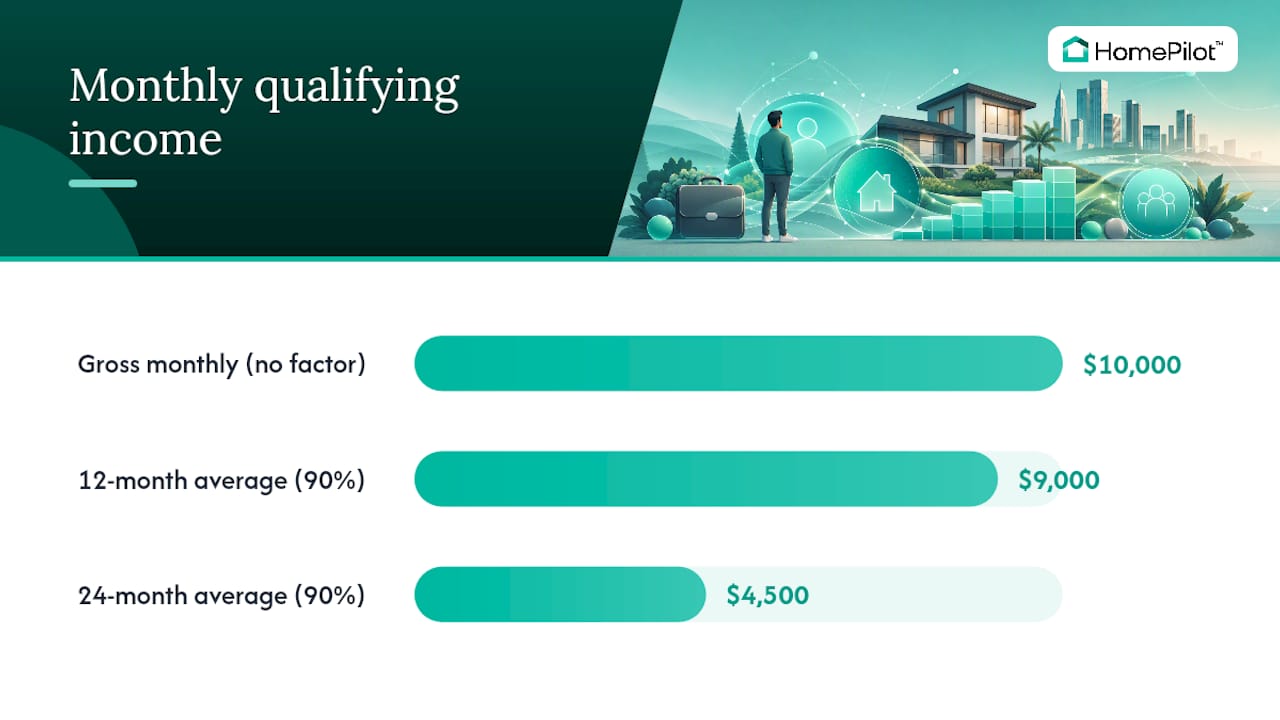
Lenders average your gross 1099 earnings over 12 or 24 months, then apply a standard expense factor rather than digging through your actual write-offs. The most common formula, used across many non‑QM programs, looks like this:
- Gross 1099 income × 90% ÷ number of months = monthly qualifying income
So $120,000 in gross 1099-NEC income over 12 months becomes $120,000 × 0.90 ÷ 12, or $9,000 a month in qualifying income. Either way, the result is roughly the same, and it avoids the guesswork of estimating your real deductions.
Qualifying math in one line: most 1099 mortgage programs use gross 1099 income times a 90% factor, divided by 12 or 24 months, to set your monthly qualifying income.
Lenders generally accept 1099-NEC as the cleanest form. Some 1099-MISC boxes count too, while 1099-K income from payment processors often draws extra scrutiny because it mixes personal and business transactions. Expect the lender to pull IRS wage and income transcripts to confirm the forms match what you filed.
What Do You Need to Qualify for a 1099 Loan?
Before you apply, assemble your file the way an underwriter will read it. Gather these documents:
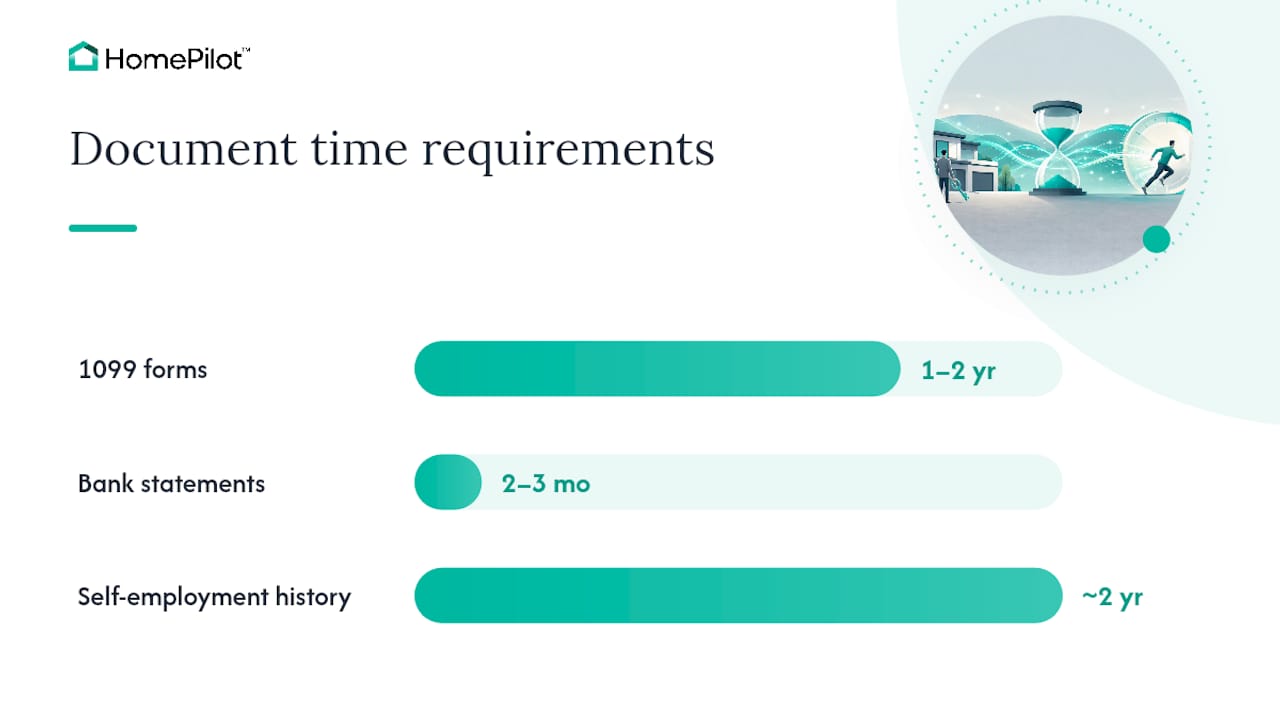
- One to two years of 1099-NEC (and relevant 1099-MISC) forms from every payor.
- IRS transcripts pulled via Form 4506-C to confirm the 1099s match your filed income.
- Two to three months of bank statements showing deposits and reserve funds.
- Government-issued ID and, if applicable, business registration or a CPA letter confirming self-employment history.
Credit thresholds for 1099 programs typically sit higher than conventional minimums, and down payment or loan-to-value expectations run more conservative, especially above certain loan amounts. Pricing on these loans usually runs above conventional rates, since lenders treat 1099 documentation as a higher-risk, income-flexible category rather than a fully verified W-2 file.
Watch for red flags before an underwriter finds them first. A transcript that comes back “No Return Found” instead of matching your submitted 1099s is one of the most common stalls in this process, and it forces you to produce alternate evidence like a CPA letter or client contracts. Large unexplained deposits, 1099 payor names that do not match your bank deposit descriptions, and less than two years of self-employment history all invite extra underwriting questions.
Pro Tip: Pull your own IRS transcripts before you apply. If a “No Return Found” result shows up, you will have weeks to line up alternate evidence instead of scrambling mid-underwriting.
How Long Does It Take to Apply and Close a 1099 Loan?
The path from first contact to closing follows a fairly predictable sequence:
- Quick pre-screen: a lender reviews your income type, credit range, and rough loan amount to confirm you fit the program.
- Document collection: you gather 1099s, transcripts, and bank statements.
- Pre-approval: the lender issues a conditional approval based on your file.
- Underwriting: the file goes through income verification, transcript matching, and deposit review.
- Clear-to-close: conditions are satisfied and closing is scheduled.
With a complete file, many 1099 lenders close in 15 to 30 days. Delays almost always trace back to missing transcripts, payor names that don’t line up with deposits, or deposits that fall short of qualifying income.
To speed things up: request your transcripts the moment you start shopping, make sure payor names on your 1099s match your bank statement descriptions, and prepare a CPA profit-and-loss statement if your income is irregular. Your year-to-date deposits should generally support at least 80% of your qualifying income to avoid a wave of underwriter follow-up questions.
Is a 1099 Loan the Right Choice, or Should You Consider Alternatives?
The 1099 path has clear strengths and clear costs. Weigh both before you commit to a lender.
- Pros: less paperwork than a full tax-return underwrite, often higher qualifying income for gross earners with real deductions, and a calculation you can run yourself with a calculator.
- Cons: rate bands typically sit above conventional pricing, reserve and down payment requirements run higher, and deposit verification is stricter than a standard W-2 file.
If your expenses are heavy enough that your 1099 gross doesn’t reflect your real cash flow well, a bank-statement loan, which qualifies you off deposit totals instead of 1099 forms, may produce a stronger number. If your tax returns are clean and your net income already supports the loan amount you need, a conventional mortgage will almost always price better than either non‑QM option. The 1099 route earns its place specifically when gross 1099 income beats what net income or bank deposits would show.
How HomePilot Helps 1099 Borrowers Get Wholesale Pricing
Self-employed borrowers usually pay a hidden cost beyond the interest rate: retail markup baked into a loan estimate they have no way to benchmark. This broker addresses that directly by giving borrowers access to wholesale mortgage pricing matched across more than 40 lenders.
- Get a quote quickly with no Social Security number and no hard credit pull required.
- Compare your rate against wholesale pricing across a network of lenders instead of shopping one lender at a time.
- Request a loan estimate review to see how your current offer compares.
This fits best if you want faster price transparency before committing to a lender.
A borrower with strong 1099 income but a mediocre rate quote often doesn’t know it until they compare that quote against wholesale pricing side by side.
What Should 1099 Borrowers Actually Do First?
If I had to boil this down to one sequence, it’s this: organize your 1099s by payor before you talk to anyone, confirm your transcripts pull clean, check that your bank deposits actually trace back to those payors, and set aside reserves before you start shopping rates. Skipping the transcript check is the single most common reason files stall midway through underwriting.
Use a broker when your income is irregular or your payor list is long and messy. Shop direct only if your 1099s are clean, consistent, and easy to document. If your income swings year to year, get a CPA profit-and-loss statement ready before you apply, not after an underwriter asks for one.
Jack
Ready to Compare Your 1099 Loan Options?
This service gives self-employed borrowers a side-by-side view of wholesale pricing across more than 40 lenders, built to work with non‑QM income documentation like 1099s. You get a quote quickly with no Social Security number and no hard credit pull, so you can see where you stand before a lender pulls your credit.
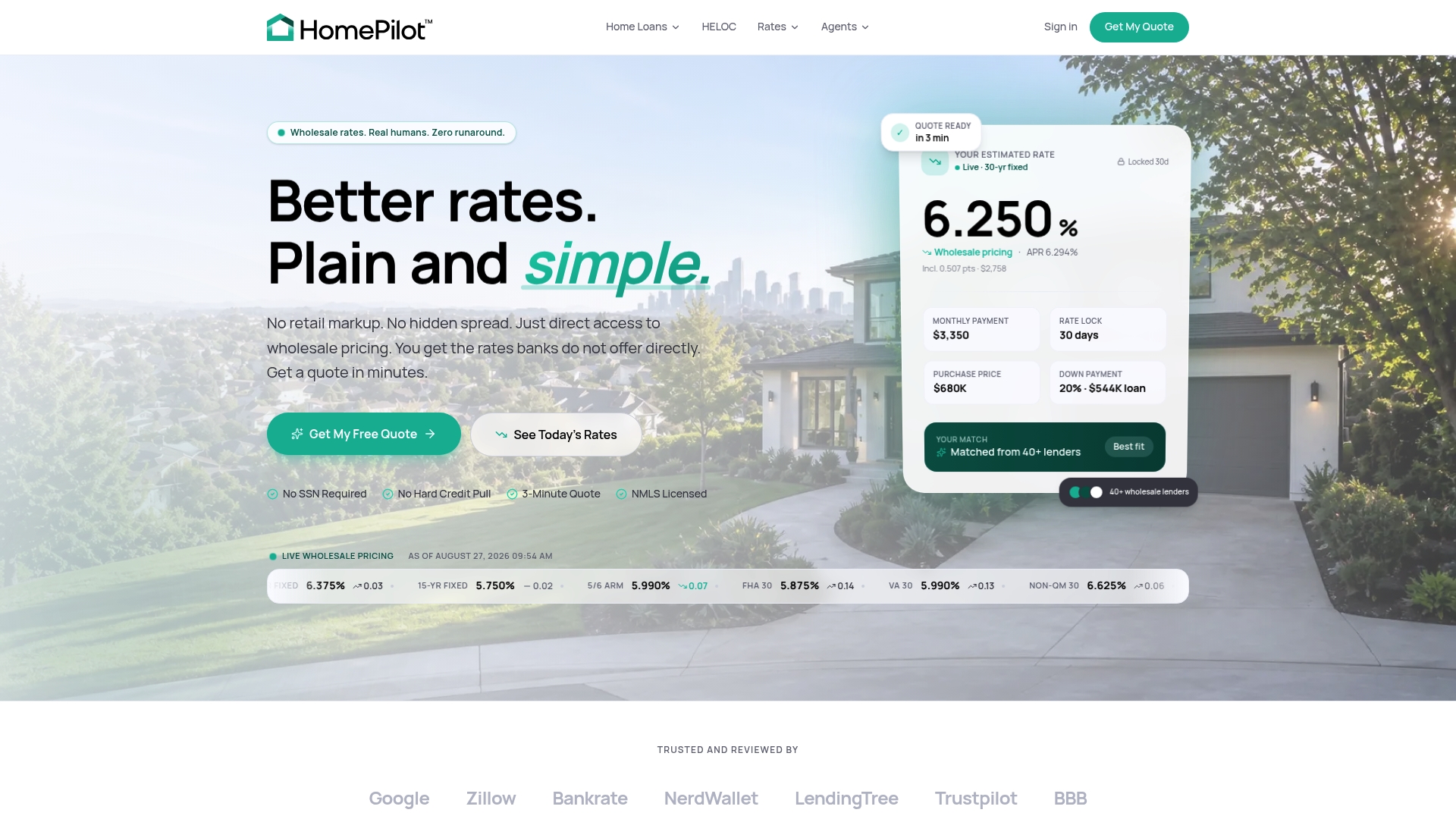
If you already have a loan estimate in hand, a free loan estimate review will show you exactly how it compares to wholesale pricing. If you’re still early in the process, start with a live wholesale rate check to see what your 1099 income could realistically support before you commit to a lender.
This article is general information, not a substitute for advice from a qualified financial advisor. Consult a qualified financial professional about your own circumstances before acting on anything here.