Freddie 240 vs Portfolio 60–120: U.S. Asset Depletion Mortgage Rules
· By the HomePilot team · Reviewed by a licensed loan officer · Company NMLS #2752340

Freddie 240 vs Portfolio 60 to 120: U.S. Asset Depletion Mortgage Rules

An asset depletion mortgage lets a lender treat your savings, brokerage holdings, and retirement accounts as a substitute for a paycheck, converting those balances into a monthly qualifying income figure. It exists for people who are asset rich but income light: retirees living off a portfolio, self-employed owners between good tax years, and high net worth borrowers who do not draw a W2 salary. Agency and portfolio programs calculate that income differently, so the right fit depends on which lender’s math works best for your numbers.
TL;DR:
- Asset depletion mortgages are best suited for high-net-worth, asset-rich, and income-light borrowers like retirees or self-employed individuals with substantial savings.
- The qualifying income varies significantly depending on the lender’s chosen depletion period, typically between 60 and 360 months, affecting approval thresholds.
- Only certain assets, such as checking, savings, and some brokerage accounts, count fully or partially after applying discounts based on liquidity and volatility.
- These loans usually have higher interest rates and fees compared to conventional mortgages, especially on portfolio or non-QM programs with shorter divisors.
- Proper preparation involves gathering account statements and clarifying divisor assumptions with lenders upfront to avoid delays or surprises.
Table of Contents
- What Is an Asset Depletion Mortgage and How Is Qualifying Income Calculated?
- Which Assets Count, and How Much Do Lenders Discount Them?
- What Credit Score, Down Payment, and Reserves Do You Need?
- Agency Rules Versus Portfolio Programs: Which Divisor Applies?
- Who Actually Benefits From an Asset Depletion Loan?
- How Do You Prepare an Application and What’s the Timeline?
- What Are the Risks of Qualifying on Assets Instead of Income?
- What Do Asset Depletion Mortgages Typically Cost?
- How Does This Loan Type Affect Taxes and Estate Planning?
- HomePilot’s Perspective: When to Call a Broker
- Ready to See What Your Assets Qualify You For?
- Sources
- FAQ
What Is an Asset Depletion Mortgage and How Is Qualifying Income Calculated?
Lenders also call this asset dissipation or asset utilization underwriting. Rather than looking at your pay stubs, they treat your liquid net worth as a hypothetical annuity and spread it over time to produce a monthly figure that stands in for income, a method the Office of the Comptroller of the Currency formally recognizes as legitimate underwriting when lenders apply conservative controls.
The math generally runs in this order:
- Total your eligible assets across cash, investment, and retirement accounts.
- Apply the lender’s discount, or haircut, to non-cash holdings based on volatility and liquidity.
- Subtract funds already earmarked for the down payment, closing costs, and required reserves, if the program calls for it.
- Divide what remains by a chosen depletion period, commonly somewhere between 60 and 360 months.
That divisor matters more than most borrowers realize. A shorter divisor like 60 months spreads the same asset pool over five years and produces a much higher monthly qualifying income than a 360 month divisor, which stretches the same dollars across three decades. Two lenders looking at an identical brokerage statement can hand you very different approval numbers.
Which Assets Count, and How Much Do Lenders Discount Them?
Not every dollar counts the same way. Lenders sort your holdings into tiers based on how quickly and reliably they can be converted to cash.
- Checking, savings, money market accounts, and CDs typically count at 100 percent of their value.
- Brokerage accounts, stocks, bonds, and mutual funds usually count at somewhere between 70 and 100 percent, depending on how volatile the lender considers the holdings.
- Retirement accounts like 401(k)s and IRAs often get a further reduced percentage, and some agency guidelines factor in whether you have reached the age where you can access funds without penalty.
- Equity in other real estate or a business ownership stake can sometimes count, but it requires a formal valuation and comes with a steeper discount than liquid accounts.
Vested employer stock and cash value life insurance show up in some programs too, though acceptance varies by lender. A consumer breakdown of eligible asset types confirms this tiered treatment is standard across most programs, not a quirk of any single lender.
Pro Tip: Pull your last two months of statements before you start shopping. Knowing your discounted asset total in advance keeps you from being surprised by a qualifying income number that is lower than what your account balances suggest.
What Credit Score, Down Payment, and Reserves Do You Need?
Lenders layer their normal underwriting standards on top of the asset math. Nothing here waives the usual scrutiny; it just changes what counts as income.
- Credit score expectations commonly fall in a range where better terms generally align with higher scores, with some portfolio programs accepting lower scores at a cost.
- Down payments are often higher on jumbo and portfolio asset depletion loans than on standard conventional purchases due to lenders taking on more qualification flexibility.
- Reserves, often measured in months of housing payments, are usually required on top of whatever assets you’re using to qualify. Freddie Mac’s guidance treats this as a separate cushion, not something you can double count.
- Debt to income ratios are applied by combining asset-based income with reported income and comparing that total to monthly obligations, supported by documentation such as recent account statements and verifications.
Agency Rules Versus Portfolio Programs: Which Divisor Applies?
The path you take through underwriting changes the math significantly.
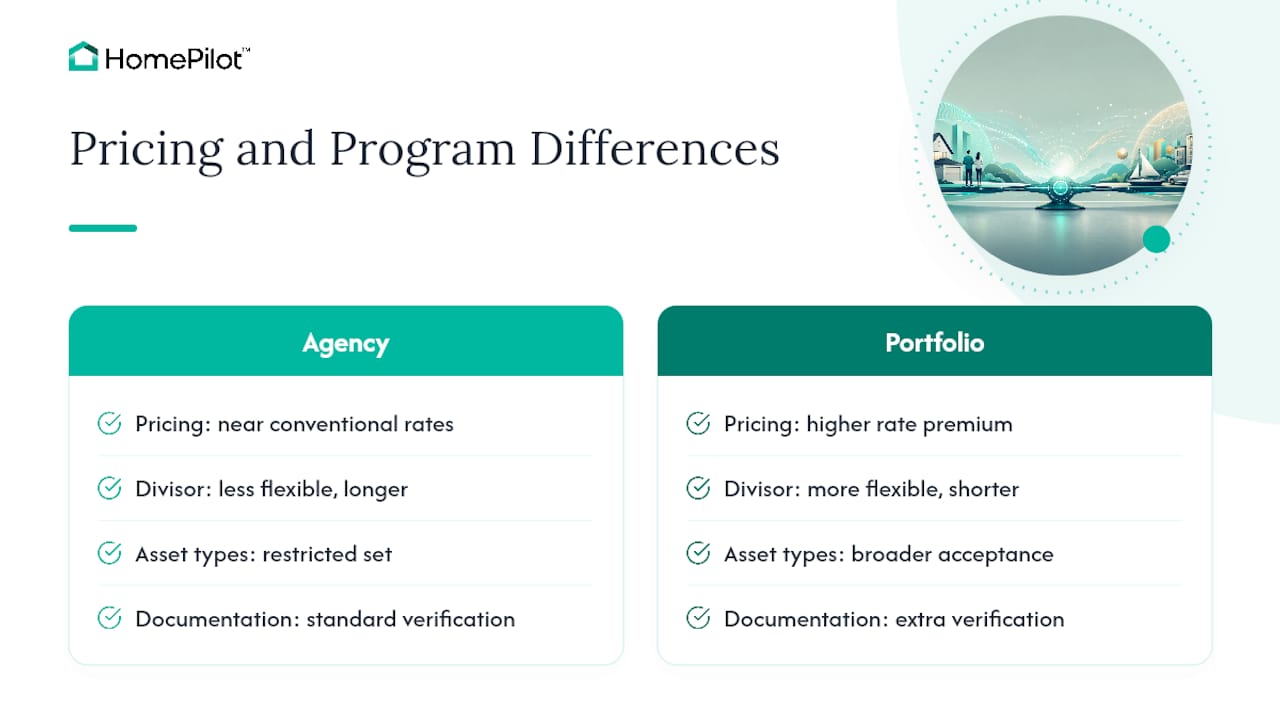
- Agency loans through Freddie Mac generally use a longer depletion period divisor, often 240 months, while Fannie Mae may use the full loan term or another program specific period. These loans typically have lower rates and fees.
- Portfolio, or non-QM, lenders often use shorter divisors, typically in the 60 to 120 month range, which produces a noticeably higher monthly qualifying income from the same asset pool.
- Retirees and self-employed borrowers with large portfolios but modest cash flow needs often gravitate toward the shorter divisor even though it usually comes with tighter reserve requirements and somewhat higher pricing.
- Borrowers who qualify comfortably under agency math generally stick with it, since the lower cost outweighs the extra qualifying income a shorter divisor would offer.
Who Actually Benefits From an Asset Depletion Loan?
This financing tends to make the most sense for a specific set of borrower profiles rather than the general population.
- Retirees drawing from investment accounts instead of a pension or steady paycheck.
- Self-employed owners whose tax returns show heavy write offs that suppress net income on paper.
- Investors sitting on liquidity between a business sale and their next venture.
- High net worth individuals with substantial holdings but little or no reported payroll income.
Asset depletion tends to beat a bank statement loan when your accounts are large and stable rather than showing strong monthly deposit activity, and it beats a DSCR loan when you’re buying a primary residence rather than a rental. Before committing, weigh how withdrawing from retirement accounts to boost qualifying numbers might affect your longer term retirement strategy or tax picture.
How Do You Prepare an Application and What’s the Timeline?
Getting through underwriting quickly comes down to having the right paperwork ready before you apply.
- Gather two to three months of statements for every account you plan to use, plus a full year for retirement accounts if the lender requests it.
- Pull trustee or beneficiary documents for trust held assets, and get a business valuation ready if ownership equity is part of your qualifying pool.
- Leave every account untouched once verification starts. Lenders re-verify balances close to closing, and moving money around mid process is one of the more common causes of last minute denial.
- Ask your lender directly which divisor they’ll use, what haircuts apply to your specific asset mix, how much must stay in reserve, and which loan types (purchase, refinance, jumbo) the program supports.
Pro Tip: Ask for the divisor and haircut assumptions in writing before you submit documents. A five minute conversation up front can save weeks of back and forth later.
What Are the Risks of Qualifying on Assets Instead of Income?
Asset depletion loans generally cost more than a standard conventional loan with straightforward W2 income, since the lender is taking on more complexity in verifying repayment ability. Expect somewhat higher rates or fees on portfolio programs in particular, and factor that premium into your decision.
- Withdrawing from a 401(k) or IRA before retirement age can trigger taxes and early withdrawal penalties, so talk to a tax advisor before treating those accounts as a financing tool.
- The OCC’s bulletin on this type of underwriting expects lenders to apply conservative discounts and thorough documentation rather than treating a full account balance at face value.
- Reserves exist as a separate safety margin. Draining an account to hit a down payment target and leaving nothing behind is one of the fastest ways to derail an approval that was otherwise on track.
Regulators built these guardrails because asset based qualification, done loosely, shifts real repayment risk onto the lender and, eventually, onto the borrower who overextended.
What Do Asset Depletion Mortgages Typically Cost?
Pricing on these loans depends heavily on which route you take. Agency backed asset depletion loans through Freddie Mac or Fannie Mae generally price close to standard conventional rates, since the underlying loan still meets agency standards once the income is calculated. Portfolio and non-QM programs price higher, reflecting the added flexibility lenders extend on divisors, asset types, and documentation.
Expect a few consistent cost factors regardless of route. Larger down payments reduce risk to the lender and can offset some of the pricing premium on portfolio loans. Jumbo loan amounts, common among asset depletion borrowers with substantial portfolios, carry their own pricing tier separate from the asset qualification method itself. Origination and underwriting fees can run slightly higher on non-QM files because of the extra verification work involved in valuing brokerage holdings, trust documents, or business interests.
The biggest cost lever most borrowers overlook is the choice between programs. A shorter divisor increasing your qualifying income might tip you into a portfolio program with a rate premium you didn’t need, when a longer agency divisor would have still gotten you approved at a lower cost. Running your numbers both ways, rather than accepting the first program a lender offers, is the difference between a reasonable payment and an unnecessarily expensive one. Because pricing shifts with credit score, reserves, and loan amount together, there’s no single number that applies across every borrower profile. Comparing a detailed quote against wholesale pricing is the only reliable way to know where you actually stand.
How Does This Loan Type Affect Taxes and Estate Planning?
The mortgage itself doesn’t create a new tax event, but the way you fund your down payment and reserves can. Selling brokerage holdings to raise cash may trigger capital gains, and withdrawing from a traditional IRA or 401(k) before the age the IRS allows penalty free access adds an early withdrawal penalty on top of ordinary income tax on the distribution. None of that is unique to asset depletion underwriting, but because these loans specifically encourage borrowers to lean on investment and retirement balances, the tax exposure comes up more often than it does with a standard income qualified purchase.
Estate planning deserves a second look too. Large qualifying asset pools are frequently held in trusts, and using trust assets to qualify usually means producing trustee documents and beneficiary information as part of underwriting, which can surface questions about how the trust is structured that are worth resolving with an estate attorney before you apply, not during underwriting. Retirees drawing down a portfolio to support a mortgage payment should also weigh how that withdrawal rate interacts with their long term retirement income plan. A loan approval based on today’s asset balance doesn’t account for how those same funds need to last for decades. None of this replaces a conversation with a qualified tax professional or estate planner, but going into the loan process aware of these intersections helps you avoid a surprise bill or a family disagreement over trust assets down the road.

HomePilot’s Perspective: When to Call a Broker
Asset depletion math varies enough between lenders that shopping a single bank’s guidelines rarely gets you the best outcome. HomePilot Mortgage is a family owned wholesale broker licensed in Arizona, California, Colorado, Florida, and Texas, and we price files across 40+ wholesale lenders rather than one rate sheet. That range matters here specifically, since divisor choice and haircut policy differ lender to lender in ways that change your qualifying income by tens of thousands of dollars. Our $500 Best Price Guarantee applies to eligible offers with terms that apply. The compliant next step is a quote or a loan estimate review, so you can see how program fit compares before committing to one lender’s assumptions.
, The HomePilot Team
Ready to See What Your Assets Qualify You For?
HomePilot Mortgage prices your file across more than 40 wholesale lenders instead of quoting off one bank’s internal guidelines, which matters most on asset depletion files where divisor and haircut assumptions swing your qualifying income significantly from lender to lender.

We charge $0 lender fees, publish live wholesale rates next to the national average every business day, and back eligible offers with a $500 Best Price Guarantee (terms apply). Purchases typically close in about 20 days from an accepted offer. You can get a quote in minutes with no hard credit pull to start, and if you already have a loan estimate in hand from another lender, our free loan estimate review compares it against wholesale pricing so you know exactly where you stand. Borrowers in Arizona, California, Colorado, Florida, and Texas can start with our state specific mortgage pages or head straight to HomePilot Mortgage to see today’s numbers and request a quote.
Sources
For readers who want to check program rules directly: the OCC’s bulletin on asset dissipation underwriting covers regulator expectations, Freddie Mac’s Guide details agency divisor rules, and NMLS Consumer Access lets you verify any broker’s or lender’s license.
- Mortgage Lending: Lending Standards for Asset Dissipation Underwriting | OCC
- Guide Home
- The Asset-Based Mortgage Master Guide 2026: Qualify on Assets, Not Income | LoanWise
FAQ
What Are the Requirements for an Asset Depletion Mortgage?
Requirements typically include eligible liquid or near liquid assets after haircuts, a credit score commonly in the 660 to 720 range for the best terms, sufficient reserves beyond the funds used to qualify, and documentation such as two to three months of account statements.
What Is the $100,000 Loophole for Family Loans?
This refers to an IRS provision letting family members lend money interest free, or at a reduced rate, up to certain thresholds without triggering imputed interest income rules, but it applies to family lending arrangements generally and is not a specific asset depletion mortgage feature. Speak with a tax professional about how it applies to your situation.
Do Most Retirees Have Their Home Paid Off?
Many retirees carry little or no mortgage debt by retirement age, but a growing share still carry a mortgage into retirement, which is exactly the population asset depletion underwriting was designed to help qualify for a purchase or refinance without traditional employment income.
Does Fannie Mae Allow for Asset Depletion?
Yes. Fannie Mae permits asset based income calculations under its own guidelines, using the loan term or a program specific period as the divisor, which generally runs longer than the divisors portfolio and non-QM lenders use.
Is an Asset Depletion Mortgage More Expensive Than a Conventional Loan?
Agency asset depletion loans price close to standard conventional rates. Portfolio and non-QM asset depletion programs typically carry a pricing premium in exchange for shorter divisors and more flexible asset treatment.
Recommended
- Mortgage Calculators
- Free Loan Estimate Review, Compare Your LE to Wholesale
- Refinance Break-Even Calculator
HomePilot Mortgage, NMLS #2752340, is a licensed mortgage broker in Arizona, California, Colorado, Florida, and Texas. Equal Housing Lender. This article is general information, not a loan offer or a commitment to lend. Rates and program terms change daily and depend on credit, loan amount, and county. HomePilot Mortgage is a private company, not affiliated with or endorsed by the Department of Veterans Affairs, HUD, or any government agency.