$832,750 Baseline: 2026 U.S. Conforming Loan Limits and County Lookup
· By the HomePilot team · Reviewed by a licensed loan officer · Company NMLS #2752340
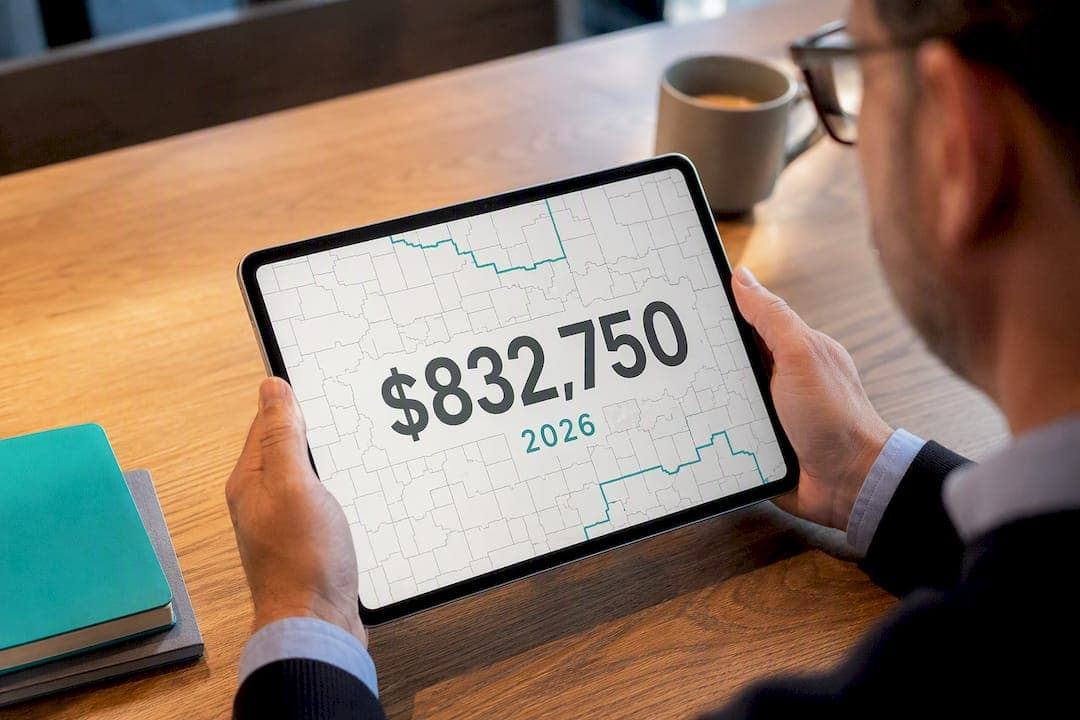
The national baseline conforming loan limit for a one-unit home rises to $832,750 in 2026, up 3.26% from 2025. The maximum ceiling for high-cost areas hits $1,249,125 for one-unit properties. Your actual limit depends on your county, so a lookup tool matters more than the national figure.
TL;DR:
- Six counties newly qualify as high-cost areas, and two Hawaiian counties now carry high-cost designations, while most counties see no change in their limits.
- Local median home prices and a 115% threshold determine high-cost status, with adjustments capped at 150% of the national baseline.
- Loans delivered to Fannie Mae or Freddie Mac on or after January 1, 2026, will use the new limits, but timing and delivery date are key to eligibility.
- Borrowers near limit thresholds should verify their county limits independently and compare multiple lenders to avoid cross-into jumbo territory unintentionally.
Table of Contents
- Conforming Loan Limits 2026: Baseline and High-Cost Ceilings by Unit Count
- High-Cost Areas and Special Statutory Regions
- How FHFA Set the 2026 Numbers
- Finding Your County’s Exact 2026 Limit
- When the 2026 Limits Actually Kick In
- Conforming, High-Balance, or Jumbo: What It Means for Your Loan
- What Loan Officers Get Wrong About the December Cutover
- Sources
Conforming Loan Limits 2026: Baseline and High-Cost Ceilings by Unit Count
The Federal Housing Finance Agency sets a new baseline every year based on national home price movement, and the 2026 numbers apply to loans backed by Fannie Mae and Freddie Mac across most of the country.
That 3.26% bump on the one-unit baseline translates to about $26,250 more borrowing room before a loan tips into high-balance or jumbo territory. For a typical single-family purchase in a standard-cost county, that extra headroom can be the difference between a conforming rate and a jumbo rate with stricter reserve requirements.
High-Cost Areas and Special Statutory Regions
A county qualifies as “high-cost” when its local median home price exceeds the baseline. FHFA sets that area’s limit at 115% of the local median, capped at the statutory ceiling of 150% of the national baseline, which is where the $1,249,125 figure for one-unit properties comes from.
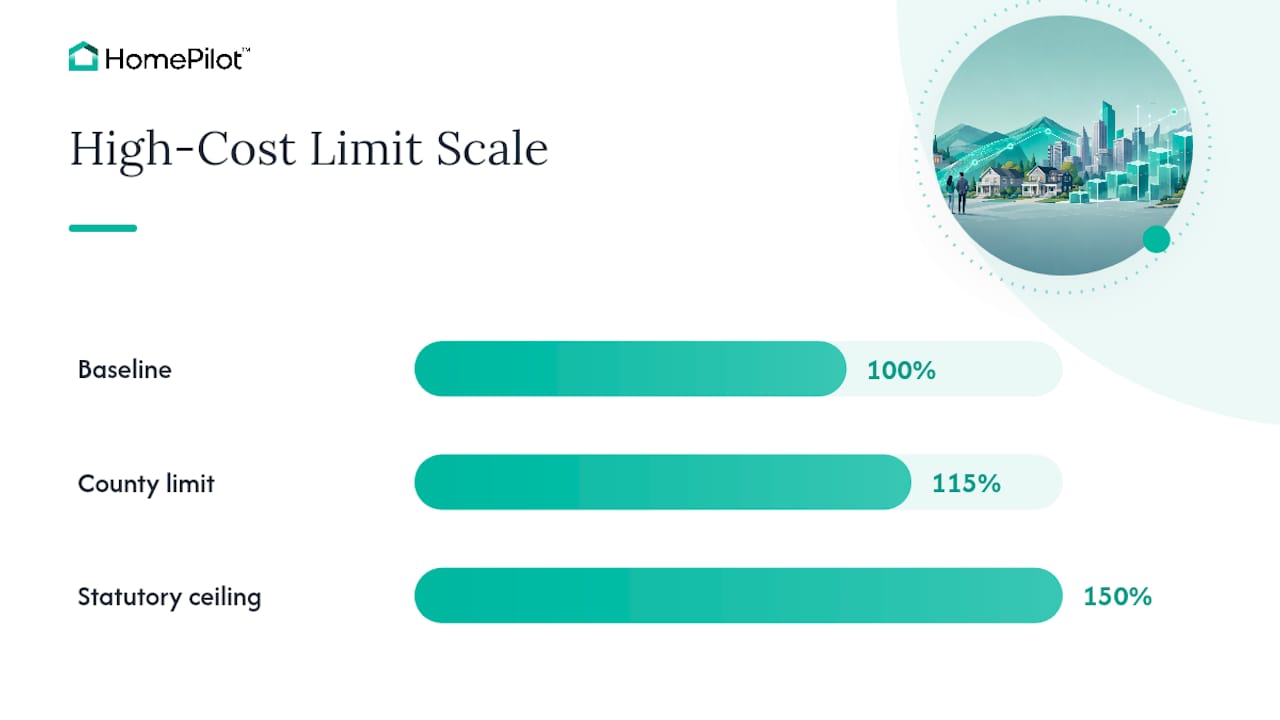
Alaska, Hawaii, Guam, and the U.S. Virgin Islands get separate statutory treatment under HERA. Their baseline for 2026 starts at $1,249,125 for a one-unit home, with the special-area ceiling climbing to $1,873,675.
A few notable shifts for 2026:
- Six counties moved into high-cost status for the first time, according to Fannie Mae’s published tables.
- Two Hawaii counties now carry high-cost designation.
- Thirty-two counties saw no change at all in their limit, even as most of the country moved up.
How FHFA Set the 2026 Numbers
The Housing and Economic Recovery Act of 2008 requires FHFA to adjust the baseline every year using national home price data rather than picking a number by committee. That’s the legal backbone behind every conforming loan limit change since 2008.
FHFA runs this through its own House Price Index, comparing the third quarter of one year against the same quarter a year earlier. For 2026, that comparison showed a 3.26% increase between Q3 2024 and Q3 2025, and FHFA applied that percentage directly to the prior baseline to land on $832,750.
Local medians work the same way at the county level, feeding into the 115% calculation that determines whether an area gets a higher limit, subject to the 150% statutory ceiling. HERA built in this dual layer, national baseline plus local adjustment, specifically so pricier metro areas wouldn’t get squeezed by a single nationwide number.
Finding Your County’s Exact 2026 Limit
National figures only tell part of the story. Here’s how to get your specific number:
- Open the FHFA conforming loan limit map and search by county or state.
- Cross-check the result against Fannie Mae’s Loan Limit Look-Up Table or Freddie Mac’s Income Limits API, both of which pull from the same underlying FHFA data.
- Select the correct unit count (one through four) and confirm whether the tool flags your area as high-cost.
Pro Tip: Match the limit against your loan’s original loan amount, not your purchase price. A loan that starts just under the cap but grows through financed closing costs can accidentally cross into high-balance or jumbo territory.
When the 2026 Limits Actually Kick In
Timing trips up more borrowers than the dollar figures do. Loans delivered to Fannie Mae or Freddie Mac on or after January 1, 2026 use the new limits, according to Fannie Mae’s Lender Letter LL-2025-04. Desktop Underwriter and Loan Product Advisor both get updated in early December to reflect the new numbers ahead of that date.
Here’s the part that surprises people: a loan originated in late 2025 can still benefit from the 2026 limits if it’s delivered into a mortgage-backed security pool with an issue date on or after January 1. That depends entirely on the seller’s delivery timeline and system settings.
High-balance loans, meaning any loan above the standard baseline but within the local ceiling, need Special Feature Code 808 at delivery. Skipping that coding step is one of the more common year-end errors Freddie Mac’s guidance flags for lenders working through the December cutover.
Conforming, High-Balance, or Jumbo: What It Means for Your Loan
A conforming loan under the standard $832,750 baseline gets the most favorable pricing and the least paperwork. A high-balance loan, one that sits between the baseline and your county’s ceiling, still qualifies for Fannie Mae or Freddie Mac backing but usually carries a slightly higher rate and stricter reserve requirements. Cross above the ceiling and you’re in jumbo territory, where underwriting standards and rates are set entirely by the individual lender rather than GSE guidelines.
Before you lock anything, run through this:
- Check your exact county limit using the FHFA map or Fannie Mae’s lookup table.
- If your loan amount exceeds the local ceiling, weigh a larger down payment, a piggyback second loan, or a jumbo product against each other.
- Get quotes across multiple lenders rather than one, since high-balance and jumbo pricing can vary more than standard conforming rates do.
A loan estimate review can show you where you stand if you’re near a threshold and want a second opinion before locking a rate.
What Loan Officers Get Wrong About the December Cutover
Every year I watch the same mistake play out: a borrower locks a rate in mid-December assuming the new limits already apply, only to find out their loan doesn’t deliver until after the new year and gets caught in a coding gap. The fix is simple. Ask us, or whoever is originating your loan, directly what delivery date they’re targeting, not just what limit table they’re quoting.
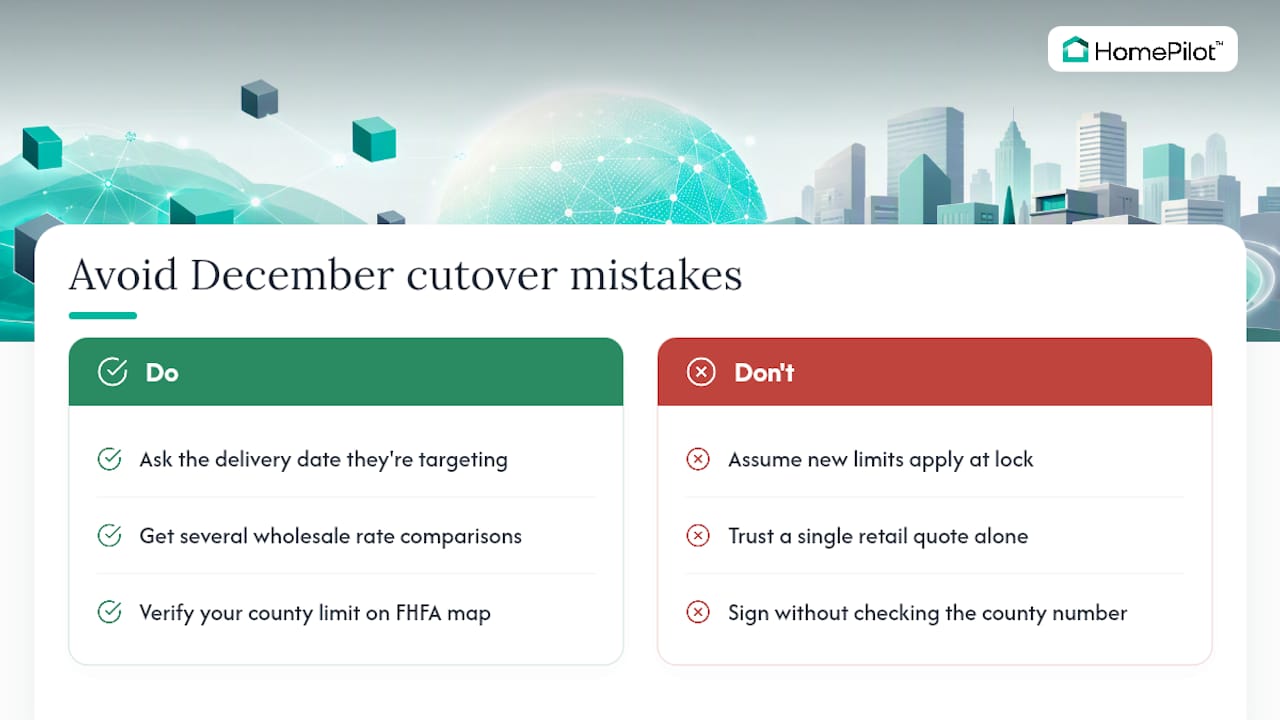
This kind of timing nuance is exactly why HomePilot Mortgage prices every file across 40+ wholesale lenders at once rather than trusting a single retail quote. If you’re shopping a purchase or refinance near a high-balance threshold, getting several wholesale rate comparisons side by side tends to surface options a single lender won’t volunteer.
Whatever you do, verify your county’s number yourself before you sign anything. Don’t take a lender’s word for your limit when the FHFA map is public and free to check.
Jack
This article is general information, not a substitute for advice from a qualified financial advisor. Consult a qualified financial professional about your own circumstances before acting on anything here.