Fannie vs Freddie: Which U.S. Lenders Approve DACA Home Loans
· By the HomePilot team · Reviewed by a licensed loan officer · Company NMLS #2752340

DACA recipients can buy a home in the United States, and yes, a DACA home loan is real and achievable through Fannie Mae conventional programs. FHA is no longer a path: HUD ended FHA eligibility for DACA recipients and other non-permanent residents for case numbers assigned on or after May 25, 2025. The catch isn’t legal status. It’s documentation and finding a lender who knows how to underwrite your file correctly. Start by confirming your Employment Authorization Document is current, then get preapproved with an originator who has actually closed DACA borrower loans before.
TL;DR:
FHA loans are closed to DACA recipients for now: HUD Mortgagee Letter 2025-09 limits FHA to U.S. citizens and lawful permanent residents for case numbers assigned on or after May 25, 2025.
Conventional Fannie Mae loans are possible for DACA borrowers using a valid EAD and acceptable documentation, but Freddie Mac excludes DACA applicants, affecting secondary market sellability.
On the conventional side, the biggest obstacles are lender familiarity and internal overlays, so working with an experienced lender or broker is essential.
Critical documents for underwriting include a current EAD with enough validity, proof of work authorization, personal income verification, and tax returns; EAD renewal timing is a common issue.
Confirming which investor will buy your loan and ensuring the lender has processed DACA files before applying can significantly reduce delays and increase approval chances.
Table of Contents
-
How to Vet a Lender Before You Waste Weeks on an Application
-
What to Expect: Timeline, Costs, and the Hurdles That Actually Slow People Down
-
Get a Quote Built Around Your Actual File, Not a Generic Rate Sheet
Which Mortgage Programs Actually Accept DACA Recipients
The biggest misconception about buying a house with DACA is that it’s a legal question. It’s mostly not. It’s a documentation and lender-policy question, and the paths that remain look very different once you dig in.
FHA is off the table for now. HUD opened FHA loans to DACA recipients in 2021 (FHA INFO #21-04), then reversed course: Mortgagee Letter 2025-09 limits FHA-insured loans to U.S. citizens and lawful permanent residents for case numbers assigned on or after May 25, 2025. Any guide that still calls FHA the easy DACA option is out of date.
Conventional loans through Fannie Mae are now the main path, and here’s where things get specific. Fannie Mae generally allows DACA borrowers to qualify with a valid EAD and acceptable Social Security or ITIN documentation. Freddie Mac’s guide excludes DACA recipients outright. That means the lender’s plan for reselling your loan on the secondary market determines whether you’re even eligible, not your credit score or your down payment.
ITIN loan products exist as a fallback for borrowers without a Social Security number, but expect higher rates, larger down payments, and more limited lender availability.
A few practical differences worth knowing before you pick a path:
-
FHA’s 3.5% down option is closed to DACA borrowers for now (Mortgagee Letter 2025-09), so plan around conventional down payment minimums instead.
-
Conventional Fannie Mae loans often demand stronger credit and a slightly larger down payment, but no mortgage insurance once you hit 20% equity.
-
ITIN loans trade flexibility on identification for higher costs across the board.
Eligibility Checklist: Documents Lenders Will Ask For
Underwriters treat a DACA file like any other, with one added layer: proving your work authorization is current and reliable. Gather these before you apply.
-
Current EAD (Form I-766) with enough validity remaining before your projected closing date.
-
DACA approval notice (Form I-797) showing your case history.
-
Social Security number, or ITIN documentation if pursuing an ITIN-specific product.
-
Two years of tax returns, or alternative income documentation if you’re newer to steady work.
-
Recent pay stubs and two to three months of bank statements to verify income and reserves.
EAD timing trips up more DACA borrowers than any other single issue. If your EAD expires within a lender-defined window before closing, most lenders will want proof of a prior renewal history or evidence you’ve already filed for renewal. An EAD that lapses mid-underwriting can stall or kill a file that was otherwise clean.
Pro Tip: File your EAD renewal the moment you’re eligible, don’t wait for the expiration date to approach. A pending renewal receipt plus a track record of on-time past renewals gives underwriters the confidence they need to move forward.
Credit and income expectations mirror standard Fannie Mae conventional guidelines, which generally want a stronger credit score and debt-to-income ratio than FHA would. The red flags that cause delays are almost always the same: an EAD renewal filed too late, inconsistent income documentation, or a lender who simply doesn’t know how to process a non-permanent resident file.
How to Vet a Lender Before You Waste Weeks on an Application
Not every loan officer has handled a DACA file, and the wrong one can burn a month of your time before telling you no. Ask these questions upfront.
-
Will this loan be originated with the intent to sell to Fannie Mae, or does your process route through Freddie Mac? This single question determines eligibility before you fill out a single form.
-
Have you personally closed loans for DACA borrowers, or is this a hypothetical for your team?
-
What’s your specific process for handling an EAD that’s near its expiration date?
-
Do you have documented internal procedures for non-permanent resident borrowers, or are you improvising?
Here’s the uncomfortable truth: the most common obstacle isn’t federal policy, it’s lender unfamiliarity. Plenty of loan officers decline DACA applicants not because the law says no, but because their shop has a blanket internal policy or simply lacks experience with the paperwork. That’s exactly why working with a wholesale broker who prices across multiple investors matters. A broker isn’t locked into one bank’s overlays. They can confirm which lender will actually accept your file and sell it to an eligible investor before you’re deep into underwriting, not after.
What to Expect: Timeline, Costs, and the Hurdles That Actually Slow People Down
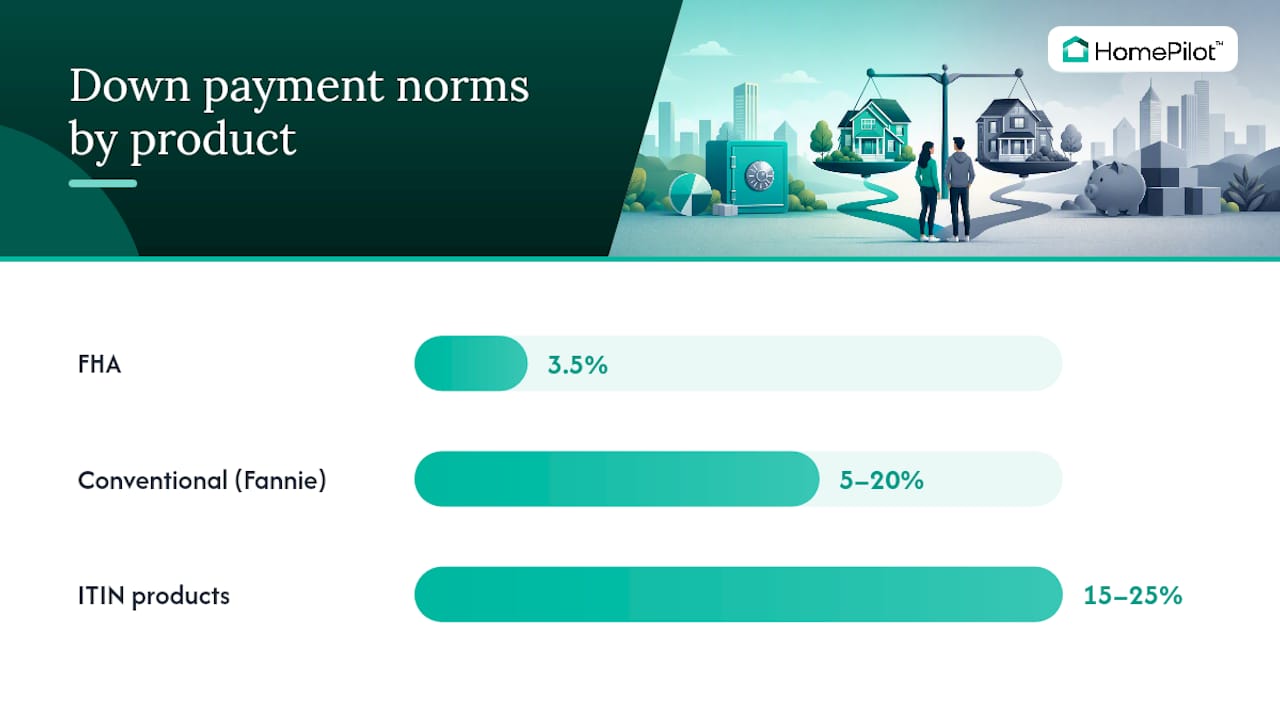
Once you’ve got a clean file with a DACA-aware lender, the path from preapproval to closing runs close to any standard purchase timeline: often three to six weeks once you’re under contract, assuming your EAD has enough runway and your documents are complete.
Down payment norms vary by program:
-
FHA: not available to DACA borrowers since May 25, 2025 (Mortgagee Letter 2025-09).
-
Conventional Fannie Mae: often 5% to 20%, depending on credit and loan terms.
-
ITIN products: frequently higher, sometimes 15% to 25%, reflecting the added risk lenders price in.
The hurdles that actually stall DACA applications aren’t mysterious. They’re EAD renewal gaps, lender overlays that go beyond federal guidelines, and confusion over which investor the loan is headed toward. Confirming your loan’s intended investor at application, before underwriting starts, removes the single biggest risk of a late-stage denial. File your EAD renewal early, get preapproved with someone who’s done this before, and ask about investor sellability before you sign anything.
How HomePilot Mortgage Fits Into Your Search
HomePilot Mortgage is a family-owned wholesale broker (NMLS #2752340) licensed in Arizona, California, Colorado, Florida, and Texas, and we price files across 40+ wholesale lenders instead of quoting from a single bank’s rate sheet. For a DACA borrower, that matters directly: we can confirm which lender in our network will actually originate your loan with the correct investor in mind before you commit to an application.
Here’s what to have ready before you reach out:
-
Your current EAD and DACA approval notice
-
Two years of income documentation
-
Questions about which of our lenders handles Fannie Mae files for DACA borrowers most often
Check our live rates against the national average daily, review our purchase loan process, or ask about conventional options built for lower down payment scenarios.
Primary Sources Worth Bookmarking
For direct verification, read HUD’s Mortgagee Letter 2025-09, which ended FHA eligibility for non-permanent residents as of May 25, 2025, and Fannie Mae’s Selling Guide B2-2-02 on non-U.S. citizen borrower eligibility.
Why the Real Barrier Isn’t the Law, It’s Lender Habit
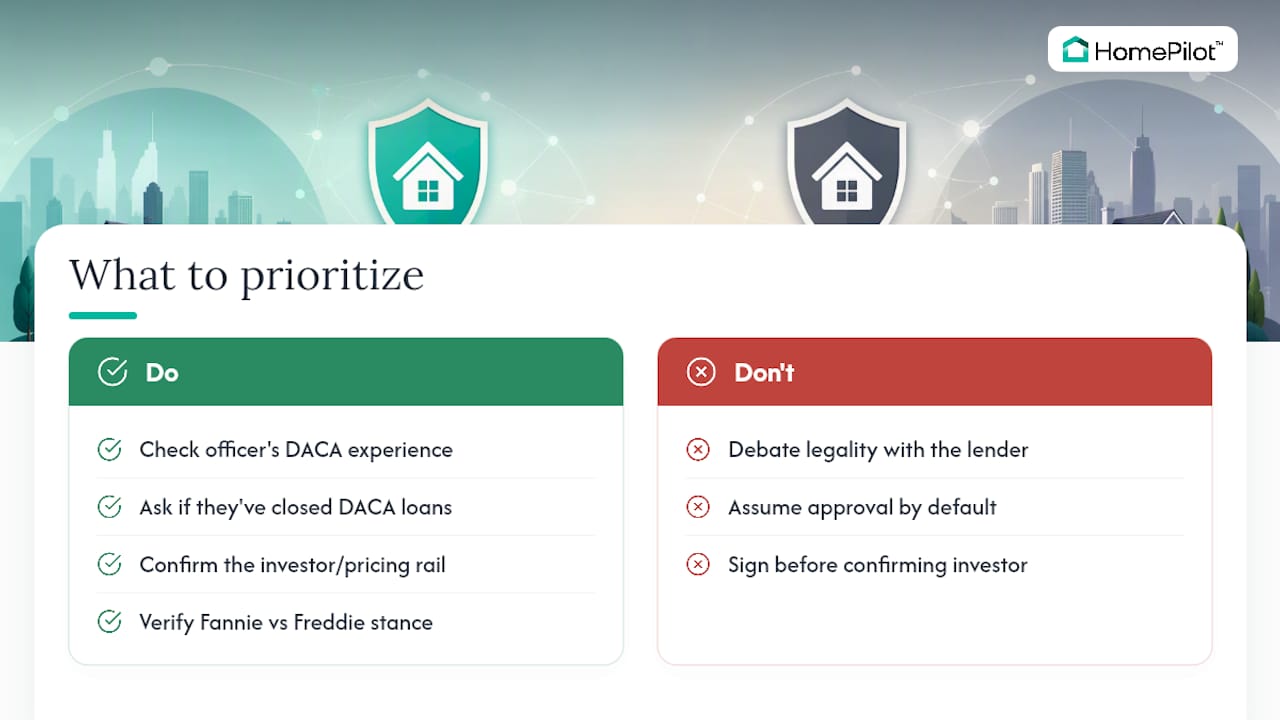
The conventional advice on DACA home loans spends too much time reassuring readers that buying a house is “technically legal” and not enough time on what actually kills applications: lenders who default to “no” out of unfamiliarity rather than any federal rule. HUD has since closed the FHA door (Mortgagee Letter 2025-09). Fannie Mae settled the conventional question with clear documentation standards, so on that path the friction left is almost entirely operational, not legal.
That changes what you should prioritize. Don’t spend your energy re-litigating whether DACA recipients can get a mortgage. Spend it vetting whether the specific loan officer in front of you has actually closed one of these files and knows which investor their pricing rail is built around. The Fannie versus Freddie distinction is the detail most borrowers never hear about until it costs them a denial letter, and it’s the single most useful thing to confirm before you sign anything.
The HomePilot Team
Get a Quote Built Around Your Actual File, Not a Generic Rate Sheet
HomePilot Mortgage prices your file across 40+ wholesale lenders instead of running you through one bank’s narrow guidelines, and that matters more for a DACA borrower than almost anyone else applying for a mortgage. We charge $0 lender fees, back our pricing with a published $500 Best Price Guarantee (eligible offers, terms apply), and publish our live rates next to the national average every business day so you can check the numbers yourself.

We’re a family-owned wholesale broker licensed in Arizona, California, Colorado, Florida, and Texas, and purchases through us average about 20 days from accepted offer to close, with a standard commitment of 30 days or less. If you’re ready to see what’s actually available for your file, get a quote in minutes with no hard credit pull, or start with our purchase loan page to see how the process works from the first step.
This article is general information, not a substitute for advice from a qualified financial advisor. Consult a qualified financial professional about your own circumstances before acting on anything here.
FAQ
Can DACA Recipients Buy a House in 2026?
Yes. DACA recipients can buy a home through Fannie Mae conventional programs with a valid EAD, acceptable Social Security or ITIN documentation, and standard income documentation. FHA is no longer an option: HUD ended FHA eligibility for non-permanent residents on May 25, 2025. On the conventional side, the main barrier is finding a lender experienced with non-permanent resident files.
Can I Buy a Home if I Have DACA?
Yes, having DACA status does not block you from buying a home. You’ll need a current Employment Authorization Document, proof of income, and a lender willing to originate Fannie Mae eligible loans, since FHA stopped insuring loans to DACA borrowers in May 2025 and Freddie Mac excludes them.
Can DACA Recipients Get an FHA Loan?
Not anymore. HUD Mortgagee Letter 2025-09 limits FHA-insured loans to U.S. citizens and lawful permanent residents for case numbers assigned on or after May 25, 2025, which ended the eligibility FHA INFO #21-04 had extended to DACA recipients in 2021. Fannie Mae conventional loans remain available to DACA borrowers.
How Long Do You Have to Live in a NACA House?
NACA’s program has its own occupancy and membership rules separate from FHA or conventional financing, and specifics vary by NACA’s own guidelines rather than DACA eligibility rules. If you’re weighing a NACA path against a broker-based conventional loan, comparing the two side by side is the fastest way to see which fits your situation.
Does HomePilot Mortgage Work With DACA Borrowers?
HomePilot Mortgage prices files across 40+ wholesale lenders, so we can check which of them will originate a Fannie Mae eligible loan for your DACA file before you apply. Start with a quote to see which lenders in our network fit your documentation and investor requirements.
Recommended
HomePilot Mortgage, NMLS #2752340, is a licensed mortgage broker in Arizona, California, Colorado, Florida, and Texas. Equal Housing Lender. This article is general information, not a loan offer or a commitment to lend. Rates and program terms change daily and depend on credit, loan amount, and county. HomePilot Mortgage is a private company, not affiliated with or endorsed by the Department of Veterans Affairs, HUD, or any government agency.