Breakeven First: When a Debt Consolidation Mortgage Pays in the U.S.
· By the HomePilot team · Reviewed by a licensed loan officer · Company NMLS #2752340

Yes, if you have meaningful home equity and can lock in a rate well below what you’re paying on credit cards, rolling high-interest debt into a cash-out refinance, home equity loan, or HELOC usually lowers your monthly interest and simplifies your bills into one payment. The catch is real: you’re converting unsecured debt into secured debt, and missed payments now put your house at risk, not just your credit score.
TL;DR:
- Using a cash-out refinance can lower both your mortgage and debt payments if your current rate exceeds current market rates, but may extend your loan term.
- Home equity loans offer predictable fixed payments and are ideal if you want to consolidate a known debt amount without disturbing your primary mortgage.
- HELOCs provide flexible, revolving credit at typically variable rates, but carry higher risks since missed payments can lead to foreclosure, especially with rising interest rates.
- Closing costs for refinancing usually range from 3% to 6% of the loan amount, so calculating your breakeven point is essential before proceeding.
- Consolidation is most effective when paired with behavior change that prevents re-accumulating debt, not as a quick fix to ongoing overspending.
Table of Contents
- What Is a Debt Consolidation Mortgage, and What Are Your Options?
- Weighing the Real Benefits Against the Real Risks
- What Closing Costs Look Like and How to Calculate Your Breakeven
- Do You Qualify? Credit, Equity, and Debt-to-Income Requirements
- Calculating Your Real Monthly Savings, Step by Step
- The Risks You Need to Plan Around, Not Just Acknowledge
- Alternatives Worth Considering Before You Touch Your Home Equity
- How HomePilot Mortgage Supports Your Consolidation Decision
- When Consolidation Is a Bridge, and When It’s a Band-Aid
- Get a Wholesale Rate Quote Without the Retail Markup
What Is a Debt Consolidation Mortgage, and What Are Your Options?
A debt consolidation mortgage isn’t one specific loan product. It’s a strategy: using the equity in your home to pay off higher-interest unsecured debt (credit cards, personal loans, medical bills) and replacing several payments with one, usually cheaper, mortgage-backed payment. Three tools make this possible, and each behaves differently.
Cash-out refinance replaces your entire existing mortgage with a new, larger one. You pay off the old loan, pocket the difference in cash, and use it to wipe out credit card balances. If your current mortgage rate is higher than today’s rates, this can lower your housing payment and your debt payment at once. The tradeoff: you’re resetting your loan term, which means you could be paying off that 30-year clock again from year one, even if you’re seven years into your current loan.
Home equity loan works like a second mortgage. You borrow a lump sum against your equity, separate from your primary mortgage, and repay it on a fixed schedule at a fixed rate. Payments are predictable from day one, which is exactly why people who want to consolidate a known amount of debt and never touch that credit line again tend to prefer it.
HELOC (home equity line of credit) is revolving credit, similar in structure to a credit card but secured by your house. You draw what you need during a set draw period, often 10 years, then enter a repayment period. Rates are typically variable and tied to the prime rate, which is the biggest structural difference from a home equity loan.
Here’s how homeowners typically sort themselves into each option:
- Homeowners with a mortgage rate higher than current market rates often lean toward cash-out refinancing, since they save on two fronts at once.
- Homeowners happy with their existing mortgage rate but sitting on a specific, known debt total tend to choose a home equity loan to avoid disturbing that primary loan.
- Homeowners who want flexibility, or who aren’t sure of the exact amount they need, gravitate toward a HELOC because they only pay interest on what they actually draw.
Weighing the Real Benefits Against the Real Risks
The math on paper looks appealing almost every time. A HELOC or home equity loan typically carries a rate well below the 20%-plus APR common on credit cards, and folding five payments into one makes budgeting far simpler. That’s the pitch, and it’s often true.
But the risk profile changes in a way many borrowers underestimate. Credit card debt is unsecured. Miss a payment and your score takes a hit, collectors call, but nobody takes your house. Once that same balance is rolled into a HELOC or second mortgage, it’s secured. Miss enough payments and the lender can foreclose.

There’s also a subtler risk: paying off your cards feels like a fresh start, and it’s tempting to run the balances back up while the mortgage-secured debt sits quietly in the background. Now you’re carrying both. This is the single most common way debt consolidation backfires, and it has nothing to do with interest rates.
A few things worth weighing before you decide:
- Consolidation tends to work best for borrowers with stable income and a documented plan to avoid re-accumulating balances, according to analysis from The Mortgage Reports.
- It works less well for anyone who has consolidated once before and ended up back in credit card debt within a year or two.
- Extending your loan term to lower monthly payments can quietly increase your total interest paid over the life of the loan, even when the rate itself is lower.
Pro Tip: Before you apply, write down exactly what put you in debt in the first place. If the answer is a one-time event (medical bill, job loss you’ve recovered from), consolidation is a solid tool. If the answer is ongoing overspending, fix that first or you’ll be back here in two years with a mortgage payment and new card debt.
What Closing Costs Look Like and How to Calculate Your Breakeven
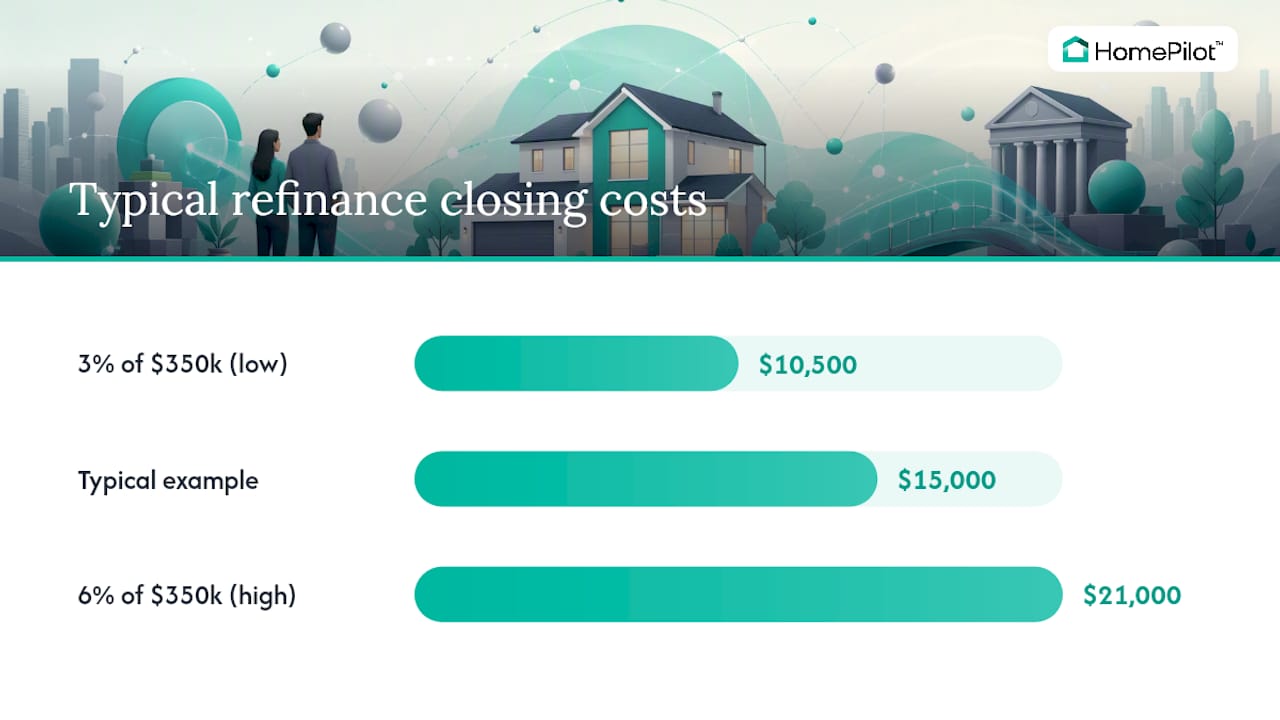
Refinancing isn’t free, and the fees can quietly erase the savings you thought you were getting. A cash-out refinance typically carries total closing costs of 3% to 6% of the loan principal, covering appraisal fees, title insurance, origination charges, and recording fees. On a $350,000 loan, that’s $10,500 to $21,000 before you save a single dollar in interest.
HELOCs and home equity loans generally cost less to open, sometimes just an appraisal and a modest administration fee, since you’re not replacing your entire primary mortgage. That difference in upfront cost is part of why many homeowners choose a HELOC over a full refinance when they’re happy with their existing mortgage rate.
Here’s how to check whether a refinance actually pays off before you sign anything:
- Add up all closing costs (get the exact figure from your Loan Estimate, not an estimate off a rate sheet).
- Calculate your monthly payment savings by comparing your current mortgage-plus-debt payments against the new consolidated payment.
- Divide total closing costs by monthly savings to get your breakeven point in months.
- Compare that breakeven point to how long you plan to stay in the home. If you’ll move before you hit breakeven, the refinance likely isn’t worth it.
Worked example: $15,000 in closing costs, $250 in monthly savings, gives you a 60-month breakeven. If you plan to stay in the house for at least five years, it pays off. If you’re likely to sell in three, it doesn’t.
The rate gap is the whole game. With HELOC rates recently averaging around 7.5% against credit card APRs commonly running 20% or higher, the interest-cost gap is where the real savings live, not the monthly payment alone.
Run your own numbers with HomePilot’s refinance break-even calculator before committing to anything.
Do You Qualify? Credit, Equity, and Debt-to-Income Requirements
Lenders look at three numbers before anything else: your credit score, how much equity you’ve built, and your debt-to-income ratio.
Credit score: Most lenders prefer a score around 680 for home equity products, though some will work with borrowers as low as 620 depending on the rest of your file and how much equity you’re bringing to the table. A lower score generally means a higher rate, which shrinks the savings you’re consolidating to capture in the first place.
Debt-to-income ratio: Lenders want to see your total monthly debt payments, including the new consolidated payment, stay within a reasonable share of your gross income. This varies by lender and loan type, so get pre-qualified before assuming you’re in range.
Before applying, tighten up your file:
- Pull your credit report and pay down revolving balances where you can, even partially, since utilization affects your score fast.
- Get a current home valuation or estimate so you know your realistic equity position.
- Gather two years of tax returns, recent pay stubs, and statements for every debt you plan to pay off.
- Avoid opening new credit lines in the months before you apply.
Calculating Your Real Monthly Savings, Step by Step
The comparison that matters isn’t your new payment against your old mortgage payment. It’s your new total payment against everything you’re paying now across every account.
To do it right, gather:
- Current balances and APRs on every debt you plan to consolidate.
- Your current mortgage balance, rate, and remaining term.
- The new mortgage or home equity rate you’re being quoted.
- All closing costs or origination fees tied to the new loan.
- The proposed new loan term.
A cash-out refinance that pays off the cards and resets your mortgage at a lower blended rate might bring that down to $1,500 a month, a real $300 monthly gain. But if that new mortgage stretches your remaining term from 22 years back out to 30, you could pay more total interest over the life of the loan even while your monthly bill drops. That tradeoff is worth running through HomePilot’s mortgage calculators before you decide, since the monthly number alone can mislead you.
A HELOC comparison works the same way, except you’re only paying interest on what you draw, so your real monthly cost depends on how much of the credit line you actually use.
The Risks You Need to Plan Around, Not Just Acknowledge
The core risk in any debt consolidation mortgage is straightforward: turning unsecured debt into secured debt means your lender can foreclose on the home if you default. That single fact should shape every decision you make in this process.
HELOCs add a second layer of risk because rates are usually variable and tied to the prime rate, which makes understanding how interest rates affect your HELOC crucial before you commit. If the Federal Reserve raises rates during your draw period, your payment can climb without warning. Some lenders, including HomePilot’s HELOC options, offer fixed-rate conversion features on portions of the balance, which is worth asking about specifically.
Watch for these warning signs when you’re shopping lenders:
- Origination fees or “processing fees” that seem disconnected from any actual service performed.
- Pressure to extend your loan term far beyond what you need just to lower the advertised monthly payment.
- A lender who can’t clearly explain what happens to your rate after the draw period ends.
- Any recommendation to consolidate debt without first reviewing your spending pattern that created it.
Pro Tip: If you’re worried about rate volatility, ask specifically about fixed-rate HELOC options or a shorter draw period. Locking part of your balance at a fixed rate early can protect you from the payment shocks that come with rising rates, and it’s a common request lenders can usually accommodate.
Alternatives Worth Considering Before You Touch Your Home Equity
Mortgage-based consolidation isn’t the only path, and it’s not always the right one, especially for smaller debt totals.
Unsecured personal loans carry higher rates than a HELOC but keep your home entirely out of the equation. If you’re consolidating $8,000 in card debt, the risk of pledging your house rarely makes sense compared to a personal loan with a fixed three-to-five-year term.
Miss that window and the deferred interest often wipes out the savings.
Snowball and avalanche paydown methods cost nothing extra and work well for borrowers with manageable balances and steady income. The avalanche method (paying off the highest-rate debt first) usually saves more in total interest; the snowball method (smallest balance first) tends to keep people motivated longer.
If your debt-to-income ratio is high enough that none of these options feel workable, a nonprofit credit counseling agency or a structured hardship program is worth exploring before you put your home on the line for debt that a payment plan might resolve just as effectively.
How HomePilot Mortgage Supports Your Consolidation Decision
Working through cash-out refinance, home equity loan, and HELOC math on your own is doable, but comparing real offers across lenders is where most homeowners lose money to fees they never noticed. HomePilot Mortgage gives borrowers direct access to wholesale mortgage rates that are typically reserved for banks, cutting out the retail markup that pads a lot of standard refinance quotes.
Getting started doesn’t require the usual friction. HomePilot’s platform delivers quotes in about three minutes, with no social security number and no hard credit pull required upfront, so you can compare numbers before committing to anything.
A few things that make the process more practical for consolidation specifically:
- HomePilot matches borrowers with over 40 lenders, which matters most for consolidation since rate and fee differences between lenders can swing your breakeven timeline by years.
- The platform covers purchasing, refinancing, and cashing out equity, so you can compare a cash-out refinance against a HELOC without starting over with a new application.
- Clear communication is central to how HomePilot operates, which matters when you’re weighing fixed versus variable rate tradeoffs under time pressure.
- HomePilot currently serves homeowners in Arizona, California, Colorado, Florida, and Texas.
When Consolidation Is a Bridge, and When It’s a Band-Aid
There’s one question that predicts whether a debt consolidation mortgage will actually help someone: will they change the spending pattern that created the debt in the first place? If yes, consolidation is a legitimate bridge to a lower-cost, single payment. If no, it’s a band-aid that buys a few quiet months before the same problem resurfaces, this time with your house attached to it.
The homeowners who do this well tend to pair the new loan with a written budget and, often, a temporary freeze on new credit. I’ve seen the pattern described in industry guidance repeatedly: consolidation works when it’s paired with a real behavior shift, and it fails when it’s treated as the fix on its own. A homeowner who consolidates $30,000 in card debt into a HELOC, then cuts up the cards and rebuilds an emergency fund, comes out ahead in a way that a homeowner who consolidates and keeps spending never does.
Jack
Get a Wholesale Rate Quote Without the Retail Markup
If the math in this article points toward consolidation, the next question is which lender actually gets you the best terms, and that’s where most of the savings potential is won or lost. HomePilot Mortgage gives you direct access to wholesale rates from over 40 lenders instead of a single retail quote, which means you’re comparing real pricing instead of one bank’s markup.

Start by running your numbers through the refinance break-even calculator to see if a cash-out refinance actually pays off on your timeline, or check the home equity options page if a HELOC or home equity loan fits your situation better. Already have a Loan Estimate from another lender? Get a free loan estimate review to see how it stacks up against wholesale pricing. HomePilot currently serves homeowners in Arizona, California, Colorado, Florida, and Texas, and getting a quote takes about three minutes with no hard credit pull. From there, you can get matched with a mortgage broker and compare real terms before you decide anything.
This article is general information, not a substitute for advice from a qualified financial advisor. Consult a qualified financial professional about your own circumstances before acting on anything here.