Escrow vs No Escrow: Compare Across 40+ U.S. Lenders
· By the HomePilot team · Reviewed by a licensed loan officer · Company NMLS #2752340

Escrow gives you predictable budgeting and lender protection because your servicer handles tax and insurance deadlines for you. No escrow gives you a lower monthly payment, but only if you have the equity, credit history, and discipline to save on your own. FHA and USDA loans generally require escrow no matter what you prefer, while conventional borrowers often get to choose. Run both scenarios through HomePilot Mortgage’s tools to see which fits your situation better before deciding.
TL;DR:
- Most borrower options for escrow waiver depend on loan type, with FHA and USDA loans requiring escrow and conventional loans potentially eligible for waiver if criteria are met.
- Running both escrow and no-escrow payment scenarios through mortgage calculators can clarify the actual dollar difference before making a decision.
- Lenders consider escrow waivers riskier and often charge fees or set minimum equity and reserve requirements; waivers can be revoked if you miss payments.
- Escrow shortages and surpluses are adjusted during an annual RESPA-regulated analysis, and missed tax or insurance payments can lead to penalties or force-placed coverage.
- Maintaining disciplined savings and checking eligibility criteria is crucial for no-escrow options, especially if your income is variable or your cash reserves are limited.
Table of Contents
- How Escrow Accounts Work
- Escrow Benefits and Drawbacks Compared
- Who Can Get an Escrow Waiver?
- Escrow Shortages, Surpluses, and Missed Bills
- Deciding Between Escrow and No Escrow: A Practical Checklist
- What Lenders Actually Think About Escrow Waivers
- Our Take on Escrow vs No Escrow
- Run Your Own Numbers Before You Choose
- Sources
- FAQ
How Escrow Accounts Work
An escrow (or impound) account is a fund your mortgage servicer holds to pay your property taxes and homeowners insurance on your behalf, according to the Consumer Financial Protection Bureau. Part of your monthly mortgage payment goes into this account, and when your tax bill or insurance premium comes due, the servicer pays it directly. You never touch that money.
Once a year, the servicer runs an escrow analysis. It projects your coming year’s tax and insurance costs, calculates the monthly amount needed to cover them plus a small cushion, and adjusts your payment accordingly. That process, along with rules for shortages and surpluses, falls under RESPA’s Regulation X, which sets timing and disclosure requirements servicers must follow.
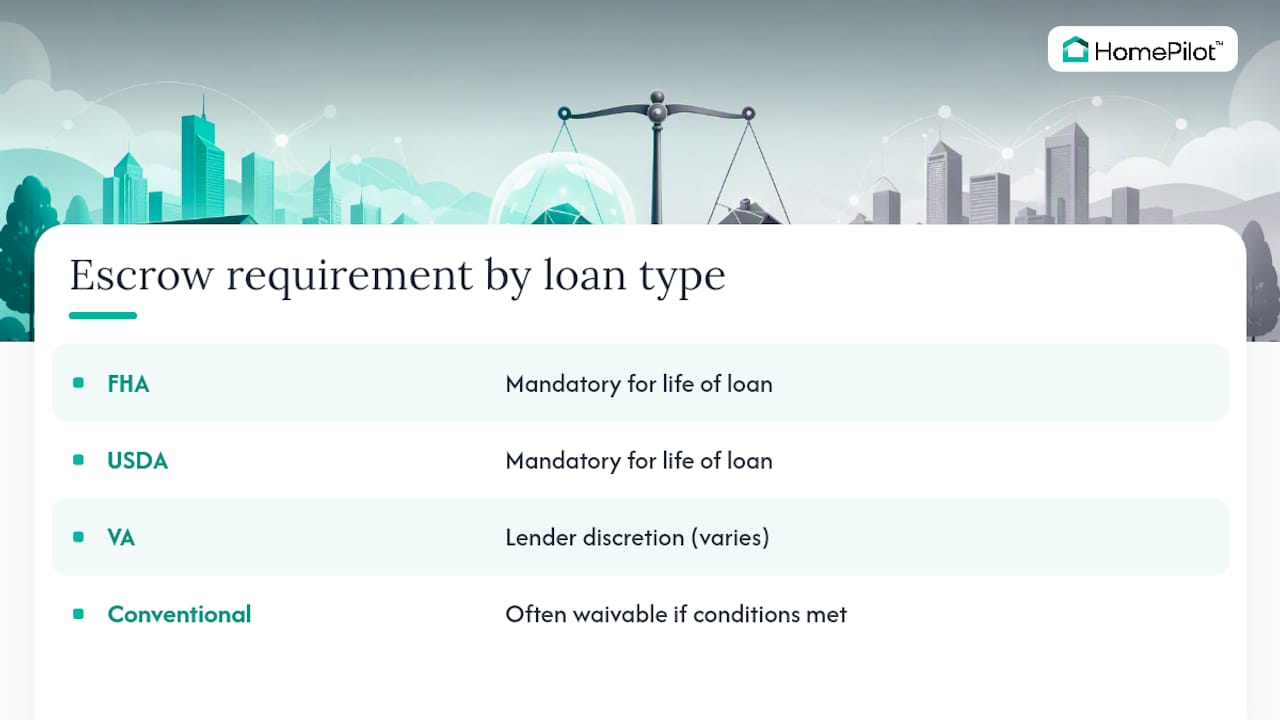
Not every borrower gets a say in this. FHA and USDA loans generally require escrow for the life of the loan. VA loans leave the decision largely to individual lenders, and conventional loans often allow a waiver if you meet certain conditions. That single distinction, mandatory versus optional, is where most of the “escrow vs no escrow” confusion starts.
Escrow Benefits and Drawbacks Compared
Escrow advantages:
- Predictable, level payment each month, no surprise tax or premium bills.
- Your servicer tracks due dates, which lowers the risk of a missed payment turning into a lien.
- Insurance stays continuously in force, so you avoid a lapse that could trigger forced coverage.
Escrow disadvantages:
- Your monthly payment runs higher because it bundles taxes and insurance into principal and interest.
- You lose control over when those funds move, and you earn no interest on the balance while it sits with the servicer.
- Escrow shortages happen when tax assessments or premiums rise faster than projected, and you absorb the difference at the next analysis.
No-escrow advantages:
- Lower monthly mortgage payment since taxes and insurance are paid separately, on your own schedule.
- You control the timing of payments and could earn modest interest managing the funds yourself.
- No cushion requirement means no money tied up beyond what you actually owe.
No-escrow disadvantages:
- You need serious budgeting discipline, since a missed property tax bill can lead to penalties or a lien.
- Some lenders can revoke a waiver mid-loan and force you back into escrow if a payment is missed.
- Letting homeowners insurance lapse risks force-placed coverage, which typically costs far more than a policy you shop for yourself.
Pro Tip: If you’re on the fence, run both payment scenarios through the mortgage calculators before you sign anything. Seeing the actual dollar difference makes the decision a lot less abstract.
Who Can Get an Escrow Waiver?
Eligibility depends almost entirely on loan program and lender policy. FHA and USDA loans generally require escrow for the life of the loan with no waiver option, while VA loans leave the call to individual lenders. Conventional loans are where most waiver requests happen, and even then, approval isn’t automatic.
Lenders typically look for:
- Loan-to-value ratio below a set threshold, often 80% or lower.
- A clean recent payment history with no late mortgage payments.
- Adequate cash reserves to cover tax and insurance bills without strain.
- A solid credit profile that shows consistent financial management.
Even if you qualify, expect a possible waiver fee or a small rate adjustment, since escrow waivers shift risk onto the borrower. Servicers can also revoke a waiver later if you miss a tax or insurance payment, putting you right back into an escrow arrangement, sometimes with less notice than you’d like.
Escrow Shortages, Surpluses, and Missed Bills
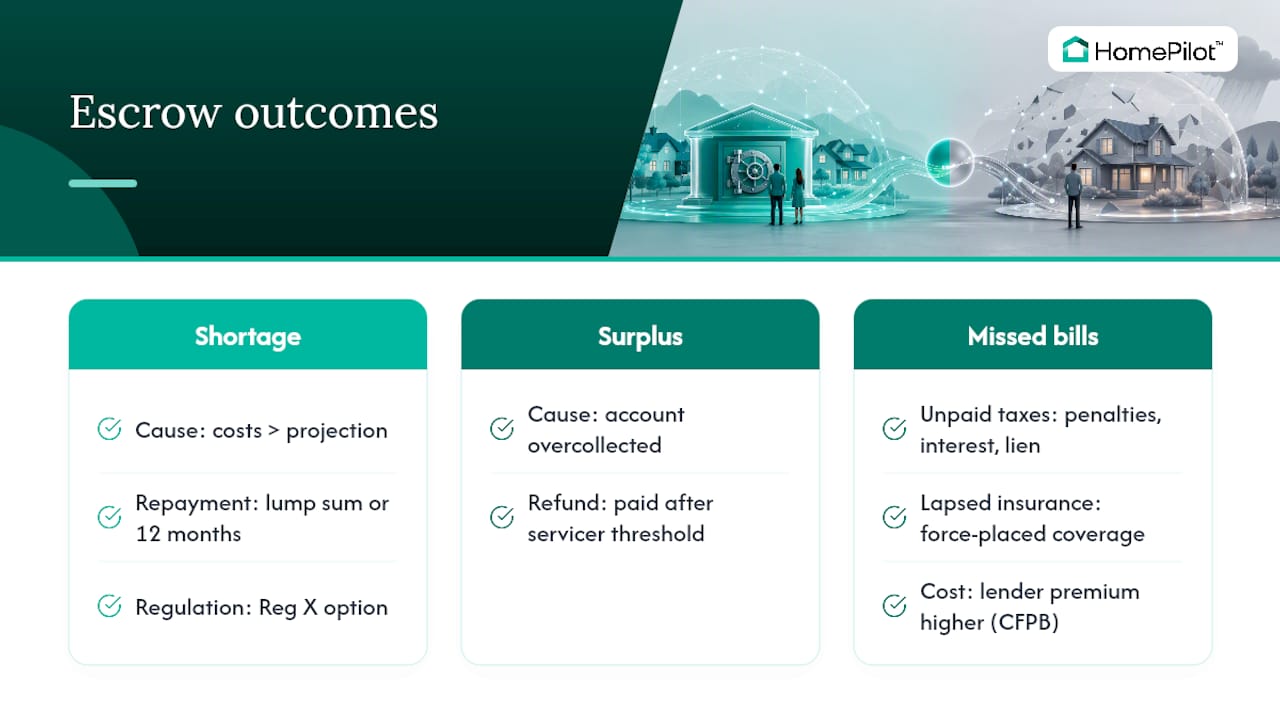
Every year, your servicer recalculates what your escrow account needs based on updated tax and insurance figures. If actual costs ran higher than projected, you end up with a shortage, and Regulation X gives you the option to repay it as a lump sum or spread over the next 12 months. If the account overcollected by $50 or more and you’re current on your payments, Regulation X requires the servicer to refund the surplus within 30 days of the analysis; smaller surpluses can be refunded or credited toward next year’s payments.
Miss a property tax payment or let insurance lapse without escrow, and the consequences escalate fast. Unpaid property taxes can lead to penalties, interest, and eventually a lien on your home. A lapsed insurance policy often triggers force-placed coverage, ordered by the lender at a premium far above what you’d pay shopping the market yourself, a real cost outlined in CFPB mortgage guidance.
Deciding Between Escrow and No Escrow: A Practical Checklist
Before you request a waiver, work through this:
- Confirm your loan program allows it. FHA and USDA borrowers can stop here since escrow is required.
- Check your equity and payment history against typical lender thresholds for LTV and on-time payments.
- Estimate your annual property tax and insurance total, then divide by 12 to set your monthly savings target.
- Open a dedicated high-yield savings or money market account for that target, separate from everyday spending.
- Set calendar reminders ahead of each due date and keep every payment receipt in case your servicer asks for proof.
Good to know: escrow shortages and surpluses are reconciled through a formal annual analysis under RESPA’s Regulation X, which sets the notice and repayment timeline servicers must follow.
Watch for red flags that make no-escrow risky: variable or seasonal income, a recent tax reassessment that could spike your bill, or thin cash reserves that leave no room for a bad month.
What Lenders Actually Think About Escrow Waivers
Lenders treat escrow waivers as added risk because responsibility for tax and insurance payments shifts entirely to you. That’s why waivers usually come with equity minimums, reserve requirements, or a small fee attached.
HomePilot Mortgage is a family-owned wholesale broker (NMLS #2752340) licensed in Arizona, California, Colorado, Florida, and Texas, with access to 40+ wholesale lenders and $0 lender fees. We publish live rates next to the national average every business day, backed by a published $500 Best Price Guarantee on eligible offers (terms apply). That gives us a real vantage point on which lenders are flexible about waivers and which aren’t, and we can run waiver likelihood checks and model your monthly cash flow before you commit either way.
Our Take on Escrow vs No Escrow
Escrow suits borrowers who’d rather not think about tax deadlines twice a year, especially first-time buyers still learning their local tax cycle. No escrow suits borrowers with strong reserves, steady income, and the discipline to actually fund a separate account every month. If you’re unsure which camp you’re in, a loan estimate review with real numbers settles it faster than guessing.
The HomePilot Team
Run Your Own Numbers Before You Choose
Deciding between escrow and no escrow gets a lot clearer once you see the actual dollar difference on your own loan, not a generic example. HomePilot Mortgage prices every file across 40+ wholesale lenders with $0 lender fees, so the payment comparison you’re modeling reflects real, current pricing instead of a rate sheet from one bank.

Start with our mortgage calculators to see how escrow versus self-paying changes your monthly payment, then check today’s live rates against the national average. If you already have an offer in hand, our free loan estimate review compares it against wholesale pricing at no cost. Ready to move forward on a purchase? Get a quote in minutes with no hard credit pull to start, and closings typically run about 20 days from accepted offer to close, with a standard commitment of 30 days or less.
This article is general information, not a substitute for advice from a qualified financial advisor. Consult a qualified financial professional about your own circumstances before acting on anything here.
Sources
FAQ
Is It Better to Escrow or Not Escrow?
Neither option is universally better. Escrow suits borrowers who want predictable payments and no deadline management, while no-escrow suits borrowers with strong reserves and the discipline to save monthly for taxes and insurance.
Why Are So Many Houses Falling Out of Escrow?
This usually refers to real estate transactions falling out of escrow before closing, not mortgage escrow accounts, and it typically happens due to financing problems, failed inspections, or appraisal shortfalls. It’s a separate process from the tax and insurance escrow account discussed here.
Do I Still Have to Pay Escrow If I Pay Off My House?
No. Once your mortgage is paid off, there’s no loan servicer collecting escrow payments, so you pay property taxes and homeowners insurance directly on your own schedule.
Can I Choose Not to Escrow?
It depends on your loan program. FHA and USDA loans generally require escrow for the life of the loan, VA loans leave it up to the lender, and conventional loans often allow a waiver if you meet equity and credit requirements. HomePilot Mortgage can check waiver eligibility across its lender network as part of a loan estimate review.
Recommended
HomePilot Mortgage, NMLS #2752340, is a licensed mortgage broker in Arizona, California, Colorado, Florida, and Texas. Equal Housing Lender. This article is general information, not a loan offer or a commitment to lend. Rates and program terms change daily and depend on credit, loan amount, and county. HomePilot Mortgage is a private company, not affiliated with or endorsed by the Department of Veterans Affairs, HUD, or any government agency.