Prequalification vs Preapproval: First-Time Buyers, Start Smart
· By the HomePilot team · Reviewed by a licensed loan officer · Company NMLS #2752340

Preapproval beats prequalification every time you’re ready to make an offer, because it’s backed by verified income, assets, and a hard credit check instead of numbers you typed into a form. Use prequalification early to get a realistic budget. Get preapproved once you’re touring homes or writing offers. Neither one is a loan promise: the final decision still depends on the property, the appraisal, and full underwriting.
TL;DR:
- Preapproval requires verified income, assets, and a hard credit check, making it more credible to sellers than the self-reported estimates used for prequalification.
- It typically takes one to three days to complete, as underwriters review detailed documentation including pay stubs, tax returns, and bank statements.
- Preapproval letters influence offer competitiveness and can reduce closing times, but they are conditional and depend on property appraisal and underwriting.
- Most preapprovals are valid for 60 to 90 days, requiring updates if your home search extends beyond that period.
- Skipping prequalification and moving straight to preapproval can surface financial issues early, increasing your chances of closing smoothly.
Table of Contents
- Prequalification vs. Preapproval: The Real Differences
- When To Use Prequalification, When To Get Preapproved
- What Lenders Actually Check Before Preapproving You
- How Preapproval Affects Your Offer and Your Closing Timeline
- Our Recommendation: Start Smart, Then Get Verified
- Ready to Move From Estimate to Offer? Here’s How HomePilot Helps
- Sources
- FAQ
Prequalification vs. Preapproval: The Real Differences
The gap between these two comes down to verification. Prequalification is a quick estimate built on numbers you report yourself, often checked against nothing more than a soft credit pull that doesn’t touch your credit score. Preapproval is the opposite: a lender pulls your actual pay stubs, tax returns, and bank statements, runs a hard credit check, and hands you a conditional loan amount based on real numbers.
Here’s how the two stack up side by side:
- Verification level: Prequalification relies on self-reported information; preapproval requires documented proof of income, assets, and debts.
- Credit check type: Prequalification typically uses a soft pull; preapproval involves a hard credit check that can briefly affect your score.
- Time to complete: Prequalification can take minutes online. Preapproval usually takes one to three business days once documents are submitted.
- How sellers view it: Agents and sellers tend to treat a preapproval letter as evidence of a serious, financially vetted buyer. A prequalification letter carries far less weight in a competitive offer.
One catch worth flagging: lenders don’t all use these words the same way. Some run a fuller check but still call it a “prequalification.” The label on the letter matters less than asking your lender exactly what was verified before you rely on it.
When To Use Prequalification, When To Get Preapproved
Think of prequalification as the budgeting stage and preapproval as the buying stage. If you’re still figuring out what you can afford, start with a quick estimate. If you’ve found homes you’d actually put an offer on, prequalification alone won’t cut it.
Here’s a practical sequence for a first-time buyer:
- Run your numbers first. Use an affordability calculator to see what payment range fits your income and savings before talking to anyone.
- Get prequalified if you’re 60+ days from house hunting. It’s a fast reality check and it costs you nothing in credit score impact.
- Move to preapproval once you’re 1 to 4 weeks from actively touring homes. Sellers in competitive markets expect it, and getting it early gives you time to fix surprises.
- Skip prequalification entirely if you already know your credit and income are solid and you’re ready to make offers this month. There’s no reason to do two steps when one gets you further, faster.
Getting preapproved earlier than you think you need to has a real upside beyond speed: it surfaces problems while you still have time to fix them. A credit report error caught during preapproval can be disputed and corrected. The same error discovered after you’re under contract can cost you the house.
Pro Tip: Don’t wait until you’ve found “the one” to start the preapproval conversation. Start it the week you begin seriously touring homes, so the letter is already in hand when you find a property worth fighting for.
What Lenders Actually Check Before Preapproving You
Preapproval isn’t a rubber stamp. It’s a documented file review, and lenders want proof, not estimates. Expect to hand over a specific set of paperwork before a lender puts a conditional number in writing.
Typical documents requested include:
- W-2s from the last two years
- Recent pay stubs covering 30 days of income
- Federal tax returns, especially if you’re self-employed or have variable income
- Two to three months of bank statements
- Government-issued photo ID and your Social Security number
Behind the paperwork, an underwriter is running the same checks that will eventually decide your loan: verifying employment, confirming assets, calculating your debt-to-income ratio, and pulling a hard credit report. This is why preapproval typically takes one to three business days rather than the few minutes a prequalification takes.
Even after all that, a preapproval letter is still conditional. It reflects what the lender believes you can borrow based on your financial profile, but final underwriting depends on the specific property you’re buying and whether the appraisal supports the price. The Consumer Financial Protection Bureau makes this point directly: both prequalification and preapproval are statements of likely eligibility, not guarantees, and every lender’s process can differ slightly. Ask your lender exactly what was verified before you count on the number.
How Preapproval Affects Your Offer and Your Closing Timeline
A preapproval letter changes how a seller reads your offer. In a multiple-offer situation, an agent representing the seller is going to weigh a buyer with verified financing more heavily than one with a rough estimate, because there’s less risk the deal falls apart during underwriting. That confidence can be the difference between your offer getting a serious look and getting passed over.
Preapproval can also shave time off your path to closing, since much of the document verification is already done before you’re under contract. But a few things can still knock a preapproval off track:
- Taking on new debt, like a car loan or a new credit card, between preapproval and closing
- Changing jobs or switching from salaried to self-employed income
- An appraisal that comes in below the contract price
- A drop in your credit score from missed payments or new inquiries
Preapproval letters also don’t last forever. Most are valid for 60 to 90 days, since lenders need your financial snapshot to stay current. If your house search runs longer than that, plan on refreshing your documentation rather than assuming the original letter still holds.
Our Recommendation: Start Smart, Then Get Verified
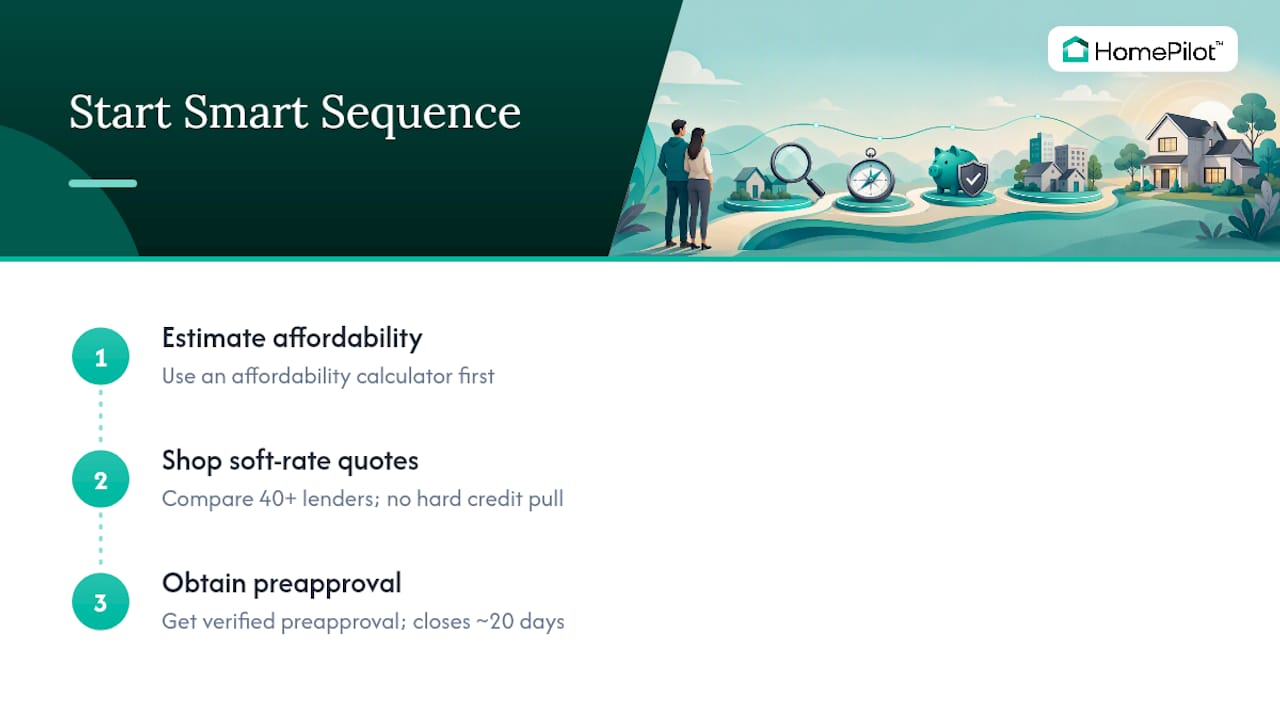
Here’s how we’d sequence it if you asked us directly: run your numbers through an affordability calculator first, then move to a real preapproval once you’re serious about making offers. Skipping straight to preapproval works too if you already trust your numbers, but don’t walk into a showing with only a guess in hand.
We compare your file across 40+ wholesale lenders with no hard credit pull required just to get a quote, so you can shop rates before committing to a hard check. We back eligible offers with a published $500 Best Price Guarantee (terms apply), and purchase loans through us close in about 20 days on average from accepted offer, with a standard commitment of 30 days or less. One thing worth repeating: confirm exactly what verification a lender performs before you trust the label on any letter, because the terms mean different things depending on who’s issuing them.
The HomePilot Team
Ready to Move From Estimate to Offer? Here’s How HomePilot Helps
HomePilot Mortgage is built for the moment you stop estimating and start making offers. Instead of one bank quoting you one rate, we run your file across 40+ wholesale lenders and keep only a thin margin on the winning price, with $0 lender fees, and you can see how that compares by checking our live wholesale rates against the national average any business day.

Getting started doesn’t require a hard credit pull. You can get a quote in minutes, see real numbers instead of a guess, and decide from there whether you’re ready to move into a full preapproval. If you’re already comparing homes, our purchase loan process is where that turns into a documented, conditional loan amount you can actually put in an offer. We also back eligible offers with a published $500 Best Price Guarantee (terms apply), so if another lender’s terms beat ours on a comparable offer, we want to hear about it. Start with a quote, and let’s get you from estimate to offer.
This article is general information, not a substitute for advice from a qualified financial advisor. Consult a qualified financial professional about your own circumstances before acting on anything here.
Sources
FAQ
Is preapproval better than prequalification?
Yes, preapproval carries more weight because it’s based on verified documents and a hard credit check rather than self-reported numbers. Sellers and agents generally treat a preapproval letter as a stronger signal of a serious, financially ready buyer.
Does prequalification hurt my credit score?
Prequalification typically relies on a soft credit pull, which does not affect your credit score. Preapproval involves a hard credit check, which can cause a small, temporary dip.
How long does a preapproval letter last?
Most preapproval letters stay valid for 60 to 90 days before they expire. If your home search runs longer, expect to update your documents and refresh the letter.
Does preapproval guarantee my loan will close?
No. Preapproval is a conditional statement based on your financial profile at the time, not a final loan commitment. The CFPB notes that final approval still depends on the specific property, the appraisal, and full underwriting.
What does HomePilot Mortgage charge to get preapproved?
HomePilot Mortgage doesn’t charge lender fees, and current pricing details for each loan program are available on our site. You can get a quote with no hard credit pull required to see where you stand before moving into a full preapproval.
Recommended
HomePilot Mortgage, NMLS #2752340, is a licensed mortgage broker in Arizona, California, Colorado, Florida, and Texas. Equal Housing Lender. This article is general information, not a loan offer or a commitment to lend. Rates and program terms change daily and depend on credit, loan amount, and county. HomePilot Mortgage is a private company, not affiliated with or endorsed by the Department of Veterans Affairs, HUD, or any government agency.