VA Approved Condos: How to Check a Building and Buy With a VA Loan
· By the HomePilot team · Reviewed by a licensed loan officer · Company NMLS #2752340
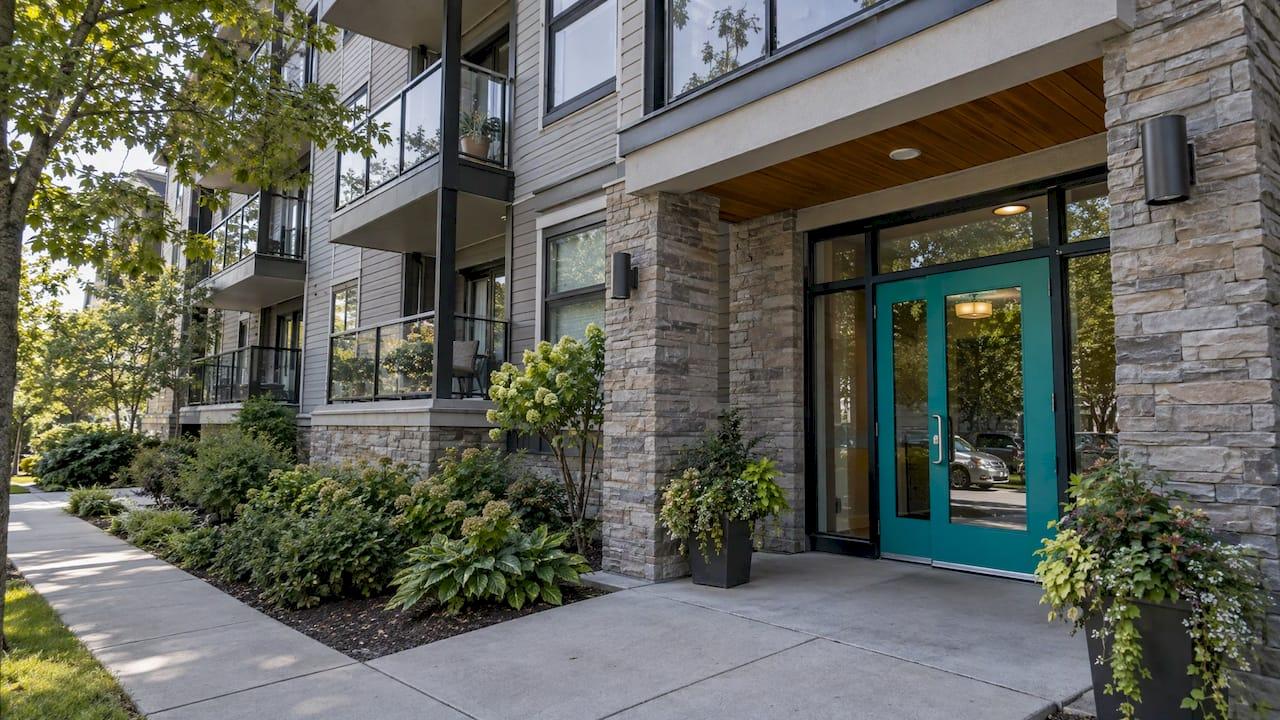
A condo can only carry a VA-guaranteed loan if the VA has approved the project, so the first job is to look the building up in the VA’s own Condo Report. If it shows up as approved, you can move forward on that point. If it does not, you still have options, including asking a VA lender to request a review. This guide walks through the search, the common reasons a building does not appear, what the VA looks at, and how the term “warrantable” fits in.
TL;DR
- The VA requires the condominium project to be approved before it can back a loan on a unit there, per the VA’s lender guide to condo approval.
- Check any building for free in the VA Condo Report. Search by state first, then by name or project ID.
- Buildings are often filed under their legal name, not the marketing name on the sales sign.
- “Warrantable” is a Fannie Mae and Freddie Mac idea for conventional loans. VA approval is a separate review, so one does not decide the other.
- A building that is not listed is not a dead end. A VA lender can ask whether a record exists under another name and whether a submission is possible. No outcome is guaranteed.
Table of Contents
- What “VA approved” means for a condo
- How to check if a condo is on the VA list
- What “HUD Accepted” means on the list
- Why a building may not show up
- What to do when the condo is not listed
- What the VA looks at in a project
- Do VA condo approvals expire?
- Warrantable vs. non-warrantable condos
- Our perspective
- Buying a VA condo with HomePilot
- Checklist before you make an offer
- FAQ
- Sources
What “VA approved” means for a condo
Two different things get approved in a VA condo purchase, and people mix them up all the time.
The first is the buyer: VA loan eligibility, the Certificate of Eligibility, and the lender’s own review of income, credit and assets. If you are still sorting out service requirements, our guide to VA loan eligibility requirements covers it.
The second is the project: the condominium building or community as a whole. The VA states that a condominium or lot must be approved by the VA to be eligible for VA loan guaranty, according to its quick reference for lenders. That is the approval people mean when they search for VA approved condos.
A project showing as approved tells you the building is on the VA’s list. It does not decide anything about your loan. The appraisal, the property condition, how you will occupy the unit and the lender’s underwriting all still apply, and nothing in this article should be read as a promise that any loan will be approved.

How to check if a condo is on the VA list
The VA runs a public lookup. There is no need to pay a listing site for it.
- Open the VA Condo Report.
- Select the state. The tool asks for it up front.
- Enter part of the condo name, the project ID, or both. The VA’s lookup lets you add the regional office and location details to narrow results.
- Open the matching record and compare the address with the unit you want to buy.
- Save a screenshot or PDF of the result with the date. Your lender will want it, and it helps if the record changes later.
The report returns approved condos, so a missing record means the VA’s system has no current approved project under what you typed. It does not by itself say the building was rejected.
Search tips that save time
- Try the legal name. Marketing names change with developers and rebrands. The name on the recorded declaration is the one most likely to match. Your agent or the association can send you a copy of the declaration.
- Try fewer words. A partial name is allowed. “Harbor” will show more than “The Residences at Harbor Pointe Phase II.”
- Try the street address. Check the record’s address against the building, since many communities have several phases or buildings.
- Search by phase. Large developments sometimes have separate records for separate phases.
- Look at the status. Some older records are labeled “HUD Accepted.” Those are explained below.
If the building appears, the next step is to talk to a VA lender about the rest of the file. You can see today’s live VA pricing at our VA loan page.
What “HUD Accepted” means on the list
You may see some projects labeled “HUD Accepted.” There is history behind that. According to a VA presentation on the condo approval process, effective December 7, 2009, the VA stopped accepting HUD/FHA condo project approvals in place of its own review. Condos the VA accepted on the strength of HUD or FHA acceptance before that date remain acceptable and show up as “HUD Accepted.”
The practical takeaway: a building that is FHA approved today is not automatically VA approved. FHA’s list and the VA’s list are separate. If you are weighing both programs, see our comparison of VA loans vs FHA.

Why a building may not show up
Most “missing” condos fall into one of a handful of buckets.
| Situation | What it usually means | Next step |
|---|---|---|
| Name mismatch | The record exists under the legal or former name | Search with the declaration name and street address |
| Wrong state or region filter | The tool is limited by what you selected | Re-run with only the state selected |
| Never submitted | No one has asked the VA to review the project | Ask a VA lender whether a submission is possible |
| Older record that is no longer current | The project may have been reviewed in the past | Ask the lender to check the status in the VA system |
| New construction | The builder may not have filed yet | Ask the builder whether VA review has been requested |
Before you decide a building is out of reach, run the search at least twice with different name versions. Then bring the dated search result to a VA lender.
What to do when the condo is not listed
This is where most buyers get stuck, and where a lender who knows the VA process earns their keep.
Step 1: Ask the lender to look. A lender can check whether a record exists under another legal name and whether it can submit the project for VA review. A submission is not a promise of acceptance, timing or outcome.
Step 2: Gather what the lender asks for. The VA’s lender guide explains that the lender creates a condo record in the VA’s WebLGY system and uploads review documents in a specified order, per the VA quick reference. The association is usually the one holding the paperwork. Expect to be asked for items like:
- Legal project name and address
- The recorded declaration, bylaws and any amendments
- The current budget and reserve information
- Information on special assessments and litigation
- Insurance documents
- Meeting minutes and rules
- Your unit number and how you plan to occupy it
Step 3: Talk to the association. The board or management company must be willing to supply documents. Some associations respond in days, others take weeks. Ask early, and ask in writing.
Step 4: Keep the purchase contract realistic. If a project review is needed, build time into your contract. Talk to your agent about financing contingency language that fits your timeline. Purchases through us average about 20 days from accepted offer to closing, with a standard commitment of 30 days or less, but a project review is a separate step from that closing clock, so raise it with your agent before you set dates.
What the VA looks at in a project
The VA wants to know the association is financially and legally sound. The review is built around the documents the association keeps: the governing documents, budgets, assessments, litigation status, insurance and similar records. The VA’s lender guide also explains that the lender is responsible for confirming title and lien-related requirements for lots or units securing VA loans in condominiums and planned communities.
In plain terms, reviewers ask questions like these:
- Is the association collecting dues and keeping a healthy budget?
- Does it hold reserves for future repairs?
- Is the building properly insured?
- Are there lawsuits or large special assessments that put owners at risk?
- Do the governing documents allow a VA-guaranteed loan to be secured by a unit?
Those questions line up with what any sensible buyer should ask too. If you can get answers to them before you make an offer, you will move faster.
Insurance is a good place to start
The master policy the association carries and the policy you carry on your own unit work together, and gaps between them are a common surprise at closing. A plain explanation of HO-6 and master policy coverage helps you ask the association the right questions about what the building policy covers and what is left to you.
Do VA condo approvals expire?
The VA’s own materials on the approval process are the place to confirm the current rules, and the Condo Report shows what the VA lists today. Because a project’s finances and documents can change, treat your dated search result as a snapshot and let the lender confirm the status in the VA system when your file is underway. That is one more reason to save the screenshot.
Warrantable vs. non-warrantable condos
These terms come up in nearly every condo conversation, and they belong to a different system.
A warrantable condo meets the project standards Fannie Mae and Freddie Mac set for loans they will purchase. Fannie Mae publishes those standards in its Selling Guide section on project standards. A non-warrantable condo fails one or more of those standards, so a conventional loan on a unit there generally cannot be sold to those agencies. Common triggers include a high share of investor-owned units, commercial space beyond a set share of the building, pending litigation, weak reserves or insurance problems.
So is a non-warrantable condo also off limits for VA?
Not automatically. The VA runs its own project review, which is why the agency stopped relying on HUD acceptance in 2009 and keeps its own list. A building can be non-warrantable for conventional purposes and still appear in the VA Condo Report. The reverse can also happen: a building that is warrantable may not be on the VA’s list because nobody has submitted it.
The only way to know is to check the VA list for that building, then have a lender review the file. The table shows how the three systems differ.
| Conventional (Fannie Mae, Freddie Mac) | FHA | VA | |
|---|---|---|---|
| Project standard | Warrantable or non-warrantable | HUD project review | VA project approval |
| Where to check | Lender review of project documents | HUD’s approved list | VA Condo Report |
| Does one decide the others? | No | No | No |
If you are comparing programs for the same condo, our guide to VA vs conventional loans breaks down cost and fit.
Our perspective
Condo financing is where the broker you pick changes the outcome. A single bank only works with its own project standards and its own rate sheet. If the building does not fit, you hear no and start over.
We work differently. As a wholesale broker, we price every file across 40+ wholesale lenders, so a building that is a problem on one lender’s rules can be a clean fit on another’s. We keep a thin margin on the winning price and charge $0 in lender fees: no origination, no processing, no underwriting charge.
For veterans, we think the best sequence is simple. Run the VA Condo Report first, save the result, then bring the legal name and address to us before you write an offer. We will tell you what the file needs and what to ask the association for, so surprises show up in week one instead of week four.
We also publish our live rates beside the national average every business day, so you can check the numbers yourself before you talk to anyone.
The HomePilot Team
Buying a VA condo with HomePilot
We are a family-owned wholesale mortgage broker (NMLS #2752340) licensed in Arizona, California, Colorado, Florida and Texas. For veterans buying a condo, that means 40+ wholesale lenders compared on one file, $0 lender fees, and a quote in minutes with no hard credit pull to start. Our published $500 Best Price Guarantee covers eligible fixed-rate conventional, FHA and VA offers (terms apply).

Ready to see where you stand? Start on our VA loan page for live rates, or go straight to purchase financing. Not sure how much entitlement you have left? Try the VA entitlement calculator. Buying in Florida? Read about Florida condo financing after the 2026 rules before you put down a deposit.
Checklist before you make an offer
- Confirm your VA eligibility and get your Certificate of Eligibility.
- Search the VA Condo Report by state, then by legal name and ID. Save a dated screenshot.
- Note the record’s address and compare it with the unit.
- If the building is missing, try alternate names, then ask a VA lender to check.
- Ask the association for the declaration, bylaws, budget, reserve information, insurance summary and any litigation or special assessment notices.
- Talk to your agent about contract timing if a project review might be needed.
- Ask for a quote with all fees listed so you can compare like with like. Zero down is possible with VA loans, but it has conditions, which we cover in zero down VA loans: 4 conditions that can cost veterans cash.
FAQ
Is there an official VA approved condo list?
Yes. The VA publishes a searchable lookup called the VA Condo Report. You pick the state, then search by name or project ID. Third-party lists can lag behind, so use the VA’s tool as the check of record.
Can I use a VA loan on a condo that is not on the list?
Sometimes, but not without a VA review first. A VA lender can check for a record under another name and ask whether the project can be submitted. The VA decides, and no timing or outcome is guaranteed, so build that uncertainty into your offer terms.
Does a non-warrantable condo mean no VA loan?
No, not automatically. Warrantable status is a conventional-loan standard tied to Fannie Mae and Freddie Mac. VA approval is its own review of the project. Check the building in the VA Condo Report and let the lender review the file.
Is an FHA-approved condo also VA-approved?
Not today. The VA stopped accepting HUD/FHA project approvals in place of its own review on December 7, 2009, per a VA process presentation. Some older buildings still show as “HUD Accepted” because they were accepted before that date.
Who can get me started?
We can. Check the building in the VA list, then bring the name and address to us. We will price your file across 40+ wholesale lenders in AZ, CA, CO, FL and TX.
Sources
- VA Condo Report (Loan Guaranty)
- LGY Condo Approval for Lenders, VA quick reference guide
- Condominium Approval Process and Future State, VA
- General Information on Project Standards, Fannie Mae Selling Guide
Recommended
- VA Loan Eligibility Requirements: Who Qualifies and How
- VA Loan vs Conventional: Which Costs Less and Fits Better
- Avoid Losing Your Deposit: Florida Condo Financing After 2026 Rules
- VA Entitlement Calculator (Bonus Entitlement)
HomePilot Mortgage, NMLS #2752340, is a licensed mortgage broker in Arizona, California, Colorado, Florida, and Texas. Equal Housing Lender. This article is general information, not a loan offer or a commitment to lend. Rates and program terms change daily and depend on credit, loan amount, and county. HomePilot Mortgage is a private company, not affiliated with or endorsed by the Department of Veterans Affairs, HUD, or any government agency.