Mortgage for Freelancers: How to Qualify With 1099 Income
· By the HomePilot team · Reviewed by a licensed loan officer · Company NMLS #2752340
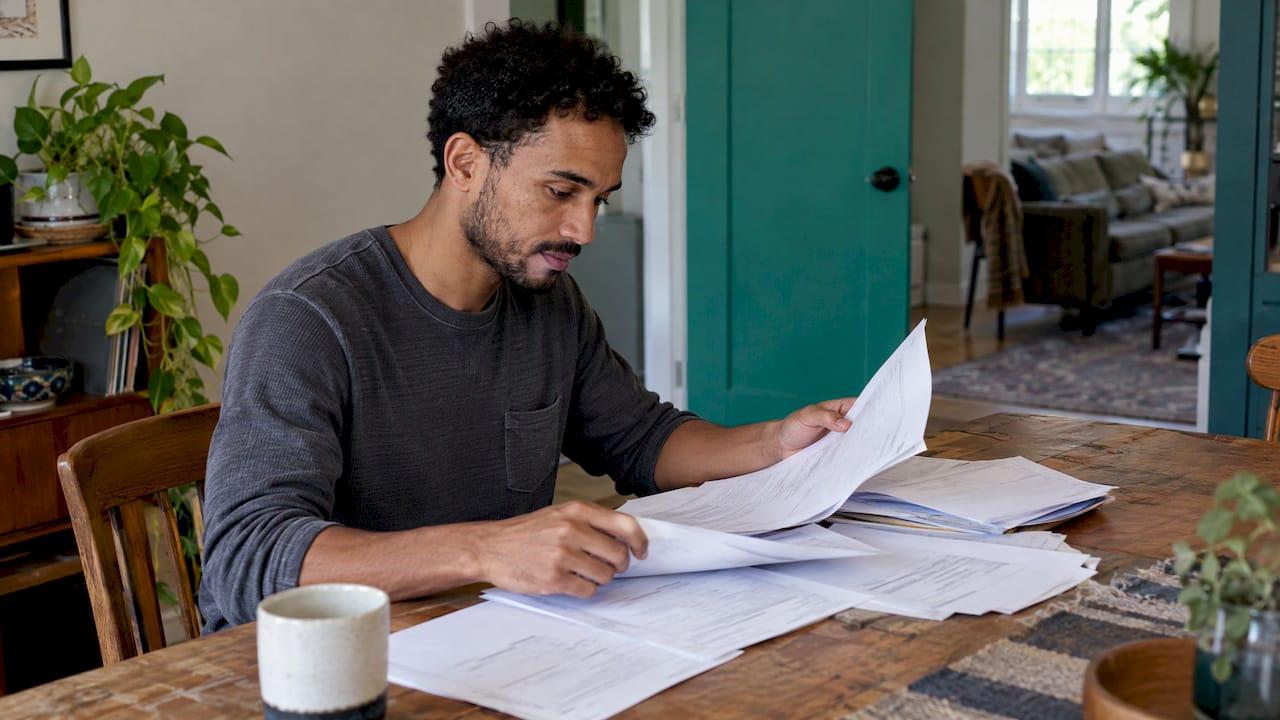
Freelancers can get a mortgage. The difference from a salaried buyer is how your income is proven, not whether it counts. Underwriters look at your net income after business expenses over time, so the right paperwork and the right loan type matter more than a steady paycheck. This guide covers how income is measured, what to gather, and which loan paths fit 1099 earners in Arizona, California, Colorado, Florida and Texas.
TL;DR
- Lenders usually want a two-year history of self-employment income, and shorter histories can sometimes work with documented prior income in the same field.
- Underwriters start from your net profit on tax returns, so heavy write-offs can lower the income that counts toward a loan.
- Conventional and FHA loans lean on tax returns. Bank statement loans use deposits instead, which can suit freelancers with large deductions.
- Gather two years of personal returns, 1099s, a year-to-date profit and loss statement and recent bank statements before you apply.
- We price every file across 40+ wholesale lenders with $0 lender fees, and you can get a quote in minutes with no hard credit pull to start.
Table of Contents
- Why a freelance mortgage works differently
- How lenders count freelance income
- The two-year history, and when less can work
- Documents to prepare before you apply
- Loan paths for freelancers
- How to strengthen your application
- Our perspective on freelancer mortgages
- Get a freelancer-friendly quote
- Protect the household after you close
- FAQ
- Sources
Why a freelance mortgage works differently
A salaried borrower hands over pay stubs and a W-2. A freelancer hands over a story told in numbers: invoices, 1099 forms, tax returns and bank activity. The loan itself is the same product. The extra work is on the income side.
Fannie Mae describes the core goal of self-employment underwriting plainly: determine whether the business can keep producing the income needed to cover the borrower’s debts over the long term. Everything an underwriter asks for traces back to that question. Is the income real, is it stable, and will it still be there when the mortgage payments come due?
Freddie Mac notes that documentation is often more complex for self-employed borrowers than for traditional employees, and that borrowers who can show steady or rising self-employment income may qualify. If most of your income arrives on 1099 forms, you are treated as self-employed for this purpose, even if you have no business entity and work as a sole proprietor.
How lenders count freelance income
This is where most freelancers are surprised. You may bill well, but the number that matters is not what clients paid you.
Net income, not gross revenue
Underwriters generally start from the profit shown on your tax returns. Freddie Mac says lenders review personal and, when applicable, business tax returns and document the calculation on Freddie Mac Form 91 or a similar form. Fannie Mae uses a comparable cash flow analysis. Certain noncash deductions, such as depreciation, can be added back. Most ordinary write-offs cannot.
That is why a freelancer who earned a strong gross income but deducted aggressively can look smaller on paper. Freddie Mac makes the same point: business deductions lower taxable income, which can push your debt-to-income ratio higher because the ratio is measured against that lower figure.
A simple illustration with made-up round numbers: a designer invoices $120,000 in a year and writes off $50,000 of legitimate expenses. The return shows about $70,000 of net profit. The underwriter works from the $70,000, not the $120,000. Neither number is wrong. They answer different questions, one for taxes and one for a mortgage.

Averaging and declining income
When income has been stable or rising, underwriters typically average the two years. When the most recent year dropped, expect them to give weight to the lower, more recent figure. If you can explain a dip, such as a one-time equipment purchase or a client that left and was replaced, a written explanation helps the file.
What about K-1 distributions?
If you own part of a partnership or S corporation, note that Freddie Mac says Schedule K-1 cash distributions cannot be used as qualifying income. They can, however, help show the business has liquidity and that you can reach those funds, when they are reasonably consistent with your ordinary income.
The two-year history, and when less can work
The standard expectation is two years of self-employment history. Fannie Mae generally requires lenders to obtain a two-year history of prior earnings to show the income is likely to continue.
There is room for newer freelancers. Fannie Mae may consider less than two years if your latest signed personal and business returns show a full year of income from the current business, and the file documents earlier income at the same or a higher level in a field with the same products or services, or in a job with similar responsibilities. Freddie Mac has a similar path: at least one year of self-employment income on your returns, plus documented prior income at the same or greater level in the same or a similar occupation.
In practice, this helps a W-2 employee who went freelance in the same industry. A nurse who moved from hospital staff to contract shifts, or a developer who left a company to take on the same kind of clients, has a clearer story than someone who changed careers entirely. If you have a gap or a transition in your history, our guide on what lenders check with an employment gap walks through how that is reviewed.

Documents to prepare before you apply
Gather these first, and your application moves faster. Freddie Mac lists the typical self-employed package as two years of personal tax returns, two years of business returns where they apply (including K-1, 1120 and 1120S), a year-to-date profit and loss statement and a balance sheet.
A practical checklist for a 1099 earner:
- Two years of signed federal personal tax returns, including all schedules (Schedule C for most sole proprietors).
- Your 1099 forms for the same two years, so the totals can be matched to your returns.
- A year-to-date profit and loss statement covering the current year up to the application. A simple spreadsheet is a fine start.
- Recent business and personal bank statements, which show deposits are consistent with what you report.
- Business returns and a balance sheet if you operate through an LLC taxed as a partnership, an S corporation or a C corporation.
- Proof your business is real and active, such as a business license, client letters, a signed CPA statement or business insurance, where they apply to you.
- Asset statements for your down payment and reserves.
If the latest tax return is not ready yet, Freddie Mac allows lenders to consider other records such as recent 1099s, tax liability information from an extension, or recent business bank statements. Your loan officer will tell you which apply to your file.
If part of your down payment comes from family, read our page on gift funds, the letter and the paper trail before you move any money around.
Loan paths for freelancers
There is no single freelancer mortgage. There are several loan types, and the best fit depends on how your income looks on paper.
| Loan path | How income is documented | Often a fit for |
|---|---|---|
| Conventional | Two years of tax returns, net income after deductions | Freelancers with strong net income and moderate write-offs |
| FHA | Tax returns with FHA’s own self-employment documentation rules | Buyers with smaller down payments or lower credit scores |
| Bank statement (non-QM) | Bank deposits instead of tax returns | Freelancers whose deductions shrink their taxable income |
| Jumbo | Tax return based, for larger loan amounts | High earners buying above conforming limits |
Conventional and FHA
If your returns show healthy net profit, a conventional loan is usually the first place to look. Fannie Mae’s underwriting system also weighs factors beyond income, including equity and loan-to-value ratio, liquid reserves, debt-to-income ratio and variable income, and a low loan-to-value can offset other risk in the file. In plain terms, a bigger down payment and cash reserves can strengthen a freelance application.
FHA can work for buyers with a smaller down payment. See our FHA loan page for live wholesale pricing. On eligible fixed-rate conventional and FHA offers, our published $500 Best Price Guarantee applies (terms apply).
Bank statement loans
If your write-offs are large, tax returns may understate what you really bring in. A bank statement loan looks at deposits into your accounts over a set period instead of the bottom line on your return. It is a non-QM product, so the underwriting is built around self-employed cash flow rather than a W-2 template. We explain the program on our bank statement loan page, and our guide to self-employed mortgage requirements shows when to choose bank statements and when to stay with tax returns.
Fast closes for 1099 borrowers
Documentation is the slowest part of any self-employed file, so organized paperwork is the best speed tool you have. Our article on closing a 1099 mortgage in 15 to 30 days covers how to prepare for that pace. Across our purchases, the average is about 20 days from accepted offer to closing, with a standard commitment of 30 days or less.
Rental income and investor loans
If some of your income comes from short-term rentals, lenders count it differently from freelance fees. Our guide to short-term rental financing and how income is counted explains the options.
How to strengthen your application
Most of these steps cost nothing and take weeks, not years.
- Know your net number early. Take last year’s net profit from your return, add any eligible noncash deductions, and divide by 12. That rough monthly figure is what an underwriter starts from.
- Think before the next big write-off. If you plan to buy within a year, talk with your CPA about how deductions affect qualifying income. Your tax bill and your mortgage both matter.
- Keep business and personal money separate. Clean accounts make deposits easy to trace.
- Pay down revolving debt. Lower monthly debts improve your debt-to-income ratio, which is measured against your net income.
- Build reserves. Cash left after closing makes a self-employed file stronger.
- Keep your credit steady. Avoid opening new accounts or financing large purchases while you are in the process.
- Write a short income explanation. If you changed clients, raised rates or had a dip, a plain note with supporting documents saves back and forth later.
Our perspective on freelancer mortgages
Freelancers rarely have a weak income. They have an income that is documented in a way that does not match the form. Tax returns are built to minimize what you owe, and mortgage underwriting is built to measure what you earn. Those two goals pull in opposite directions.
That is why the loan you choose matters as much as the rate. A wholesale broker can place one file with many different underwriting styles. We price every file across 40+ wholesale lenders, so a freelancer with large deductions is not stuck with one bank’s single rule for self-employed income.
We keep only a thin margin on the winning price and charge $0 lender fees. Our live rates are published beside the national average every business day at our rates page, so you can check the market yourself before you share any paperwork.
Start early, gather the documents above, and compare more than one loan structure. Do that, and being self-employed becomes a paperwork task, not a roadblock.
The HomePilot Team
Get a freelancer-friendly quote
HomePilot Mortgage (NMLS #2752340) is a family-owned wholesale mortgage broker serving Arizona, California, Colorado, Florida and Texas. You can start a purchase or a refinance and see wholesale pricing in minutes, with no hard credit pull to start. Our team can review whether tax returns or bank statements show your income better.

If you already own a home and want to lower your payment, our refinance break-even calculator shows how long the savings take to cover closing costs.
Protect the household after you close
When your income depends on you alone, it is worth planning for the month you cannot work. Once the mortgage is in place, look at coverage that protects the household if something happens to the earner. This overview of mortgage life insurance costs explains how that type of policy compares with other term options for Louisiana homeowners, and the same questions apply wherever you live: who is covered, who is paid, and what the premium looks like over time.
FAQ
Can I get a mortgage with 1099 income and no W-2?
Yes. Income reported on 1099 forms is treated as self-employment income, and lenders measure it through your tax returns, or through bank statements on a bank statement loan. The key is showing it is steady and likely to continue. Gather two years of returns, your 1099s and a current profit and loss statement.
How long do I need to be freelancing before I can buy?
Two years is the usual expectation. Fannie Mae and Freddie Mac both allow exceptions when you have at least one year of self-employment income on your returns and documented earlier income at the same or higher level in the same or a similar field. Your loan officer can tell you whether your history fits.
Do my tax write-offs hurt my chances?
They can lower the income used to qualify, because underwriters start from net profit. Some noncash items, such as depreciation, may be added back. If your deductions are large, a bank statement loan may measure your income differently, so it is worth comparing both routes before you apply.
Will getting a quote hurt my credit?
Not at the start. We offer quotes in minutes with no hard credit pull to begin, so you can see wholesale pricing before deciding how to proceed. A credit check comes later, once you choose to move forward with a full application.
What should I do first?
Pull your last two tax returns and 1099s, and calculate your net monthly income. Then compare loan structures. Start at our live rates page to see how current wholesale pricing compares with the national average.
Sources
- Fannie Mae Selling Guide: Underwriting Factors and Documentation for a Self-Employed Borrower
- Freddie Mac Seller/Servicer Guide, Section 5304.1
- Freddie Mac: Qualifying for a Mortgage When You’re Self-Employed
- Fannie Mae Selling Guide: Risk Factors Evaluated by DU
Recommended
- Close a 1099 Mortgage in 15 to 30 Days: 90% Rule for U.S. Self Employed
- U.S. Self Employed Mortgage Requirements: When to Use Bank Statement or 1099 Loans
- Bank Statement Loans for the Self-Employed
HomePilot Mortgage, NMLS #2752340, is a licensed mortgage broker in Arizona, California, Colorado, Florida, and Texas. Equal Housing Lender. This article is general information, not a loan offer or a commitment to lend. Rates and program terms change daily and depend on credit, loan amount, and county. HomePilot Mortgage is a private company, not affiliated with or endorsed by the Department of Veterans Affairs, HUD, or any government agency.