VA Termite Inspection Requirements by State
· By the HomePilot team · Reviewed by a licensed loan officer · Company NMLS #2752340
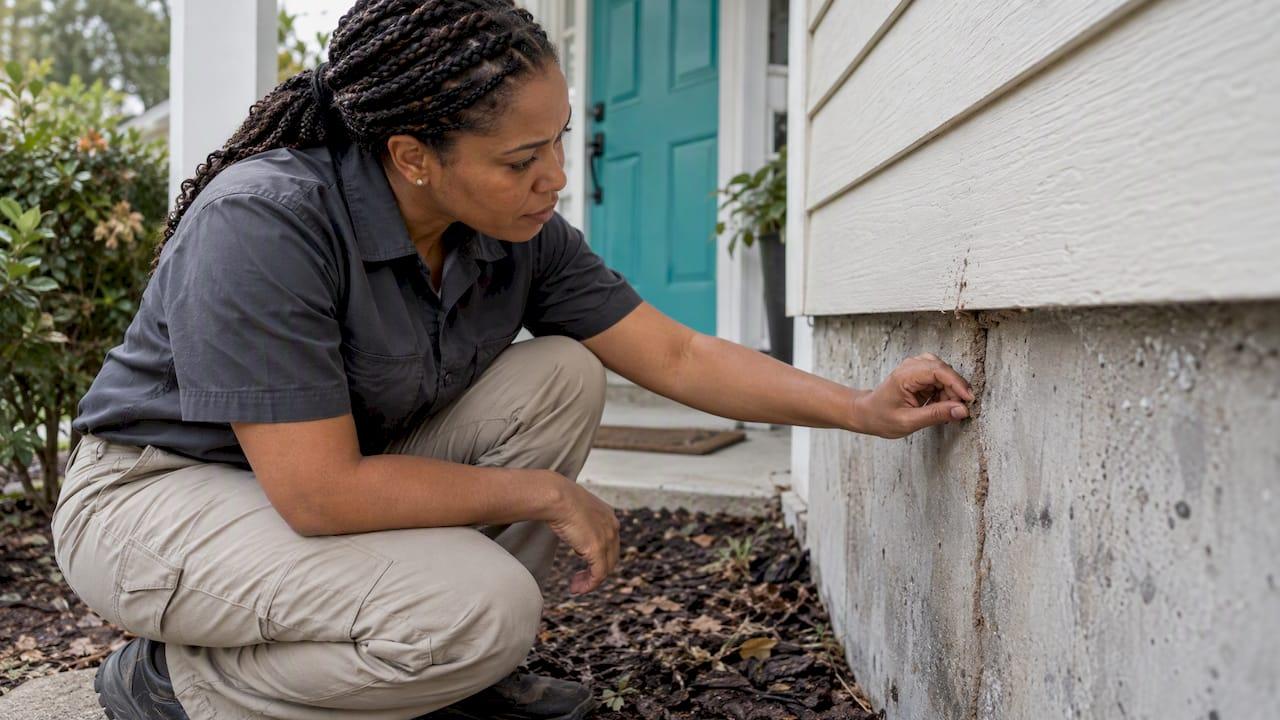
Whether a VA loan needs a termite inspection depends on where the home sits. The VA requires wood-destroying insect (WDI) information statewide in about three dozen states and territories, in listed counties only in others, and elsewhere only when the appraiser sees signs of insects or damage. Below you will find the state list, the county-by-county quirks in Colorado, who pays, and what to do if the report comes back with bad news.
TL;DR
- The VA publishes the official list of states and counties that require a wood-destroying insect inspection. Arizona, California, Florida and Texas are statewide. Colorado is county by county.
- If your state is not listed, an inspection is still required when the VA appraisal notes specific issues, such as visible infestation or damage.
- A veteran is allowed to pay for the inspection when the Notice of Value requires it, and you can still negotiate the cost with the seller.
- Termites found in the report do not automatically kill the deal. Treatment and required repairs must be finished before the VA guaranty.
Table of Contents
- Why the VA asks for a termite inspection at all
- The official rule: states, counties and appraiser discretion
- States where the VA requires an inspection statewide
- States with county-specific rules
- Pest inspection vs. termite inspection
- Who pays for the VA termite inspection
- What the report covers and what happens if it finds termites
- Timing your inspection with the rest of the purchase
- Perspective: what we tell veterans about termite rules
- Buying with a VA loan in Arizona, California, Colorado, Florida or Texas
- Get a VA quote built around the real closing timeline
- FAQ
- Sources
Why the VA asks for a termite inspection at all
The VA guarantees part of your loan, so it wants the home to meet its Minimum Property Requirements (MPRs): safe, sound and sanitary. VA Circular 26-22-11 ties the wood-destroying pest report to areas that the Termite Infestation Probability map classifies as “very heavy” or “moderate to heavy.” When an inspection applies, the Notice of Value (NOV) is conditioned on it, and any MPR repairs the report identifies must be completed before the guaranty.
That is the logic. A home with active termites or hidden structural damage is a bad collateral risk for the VA and a bad purchase for you. The inspection protects both.

The official rule: states, counties and appraiser discretion
The VA keeps a single Local Requirements page listing where WDI information must be considered before it issues the NOV. Two rules sit at the top of it:
- Only states that require an inspection are listed. If a state is not on the page, no inspection is required unless specific issues are noted in the VA appraisal report.
- Some states are listed in full. Others are listed only by county.
The same page points to Chapter 12, Section 33 of the VA Lenders Handbook, where the rules also appear.
There is one more safety net. Under the VA Lenders Handbook, the appraisal must be made subject to a WDI inspection if any infestation or damage is apparent, even outside a required area. So a home in a “not required” state can still get an inspection if the appraiser spots something, such as mud tubes, frass or soft, damaged wood.
States where the VA requires an inspection statewide
Per the VA Local Requirements page, WDI information is required for the entire state in these places:
| Region | Statewide requirement |
|---|---|
| Southwest and West | Arizona, California, Hawaii, New Mexico |
| South Central | Arkansas, Louisiana, Oklahoma, Texas, Kansas, Missouri |
| Southeast | Alabama, Florida, Georgia, Mississippi, North Carolina, South Carolina, Tennessee, Kentucky, Virginia, West Virginia |
| Mid-Atlantic and Northeast | Connecticut, Delaware, District of Columbia, Maryland, Massachusetts, New Jersey, Rhode Island |
| Midwest | Illinois, Indiana, Ohio |
| Territories | Puerto Rico, U.S. Virgin Islands, Guam, American Samoa, Northern Mariana Islands |
If you are buying in Virginia, the answer is yes: the VA lists the whole state. The same goes for Texas, Arizona, California and Florida, which are four of the five states where we are licensed.
States with county-specific rules
Several other states appear on the VA page by county only. Colorado, Iowa and New York are examples. This is where buyers get tripped up, because two homes 30 minutes apart can have different rules.
Colorado
Colorado is not statewide. The VA lists a long run of counties, including Arapahoe, Douglas, El Paso, La Plata and Montrose. If your home is in a listed county, the inspection is part of the NOV. If it is in an unlisted county, you only need one if the appraiser flags an issue. News coverage of a change to the VA website in 2025 left many Colorado agents confused about what applies, which is a good reason to check the county against the official page itself rather than a summary.
Because the list is revised from time to time, always confirm the county on the VA page at the time you write your offer.
Other county-based states
For Iowa, New York, Wisconsin, Vermont and others, find the state heading on the VA page and read the county list. A property outside the list is not exempt from the appraiser’s judgment. The visible-damage rule still applies.
Pest inspection vs. termite inspection
These terms get used loosely, and the difference matters on a VA loan.
A wood-destroying insect inspection looks specifically at termites and other insects that damage wood, such as carpenter ants and wood-boring beetles, and at the damage they cause. That is what the VA is asking for. VA training material describes the needed report as one from a state-licensed pest-control company, dated within 60 days of settlement, covering termites and/or wood-destroying insects and any damage to the primary dwelling.
A general pest inspection is broader. It may cover rodents, cockroaches, ants and other nuisances, and it might not state a clear finding on wood-destroying insects. Because the VA wants a wood-destroying insect finding on a recognized report, a general pest walkthrough is not a safe substitute. Ask the inspector, before booking, to produce the wood-destroying insect report your loan needs, and confirm with your loan officer that it will be accepted. Many companies sell both together, which is fine as long as the WDI report is part of the package.
If you want to know what an inspector actually looks at, this termite inspection checklist walks through the common signs, from mud tubes to hollow-sounding wood.

Who pays for the VA termite inspection
The VA authorizes veterans to pay the WDI inspection fee when the NOV requires it, per Circular 26-22-11. The same circular allows veterans to pay repairs needed to meet the MPRs, and it encourages you to negotiate inspection and repair costs with the seller. VA’s state fee deviation sheet, current as of February 17, 2026, repeats the point.
In practice:
- The inspection fee is usually a modest, one-time charge. Quotes vary by region and home size, so get one from a licensed company before you commit.
- Paperwork matters. To show the cost on the Closing Disclosure, you need an itemized invoice that names the veteran and the property.
- Treatment and repairs are a matter for the purchase contract. Who pays is negotiated, not set by the VA. Write it down in your offer.
Our approach at HomePilot is to ask for the inspection and its schedule up front, so the order does not sit in the queue while the closing date approaches.
What the report covers and what happens if it finds termites
The report should come from a state-licensed pest-control company and describe termites or wood-destroying insects and any damage to the main home. VA training material says:
- Active infestation needs corrective treatment by a state-licensed pest-control company.
- Damage needs corrective action, including necessary structural repairs, by a state-licensed contractor.
- Repairs that fall under the MPRs must be finished before the guaranty.
A finding is not an automatic denial of the home. It starts a treatment and repair sequence that has to be finished before closing. Here is how that usually plays out:
- The inspector finds evidence and notes it on the report.
- You and your agent ask the seller to treat, repair, or lower the price.
- A licensed company treats the home, and a licensed contractor repairs any damage.
- A clearance or updated report is issued, and the file moves forward.
Build some time into your schedule for this. Treatment is often quick, while structural repairs can take longer.
Timing your inspection with the rest of the purchase
Purchases that go through us average about 20 days from accepted offer to closing, with a standard commitment of 30 days or less. A termite inspection fits inside that window when you order it early. Our suggestion:
- Order it the same week your offer is accepted, alongside your home inspection. Our guide on home inspection vs. appraisal explains how the two differ and why you want both on the calendar early.
- Mind the 60-day window. The report should be recent relative to settlement, so do not order too far ahead.
- Ask the appraiser’s expectations early. Appraisers can flag visible damage, so a seller who knows about old wood damage should say so before the appraisal.
Perspective: what we tell veterans about termite rules
The termite requirement is one of the most misunderstood parts of a VA purchase. We see two mistakes over and over. The first is assuming the rule is the same in every state, when the VA publishes a state-by-state and county-by-county list. The second is treating a failed report as a dead end, when in most cases it is a repair-and-negotiate problem.
Our advice is simple. Look up the property address on the VA page before you write an offer. Order the correct wood-destroying insect report, not a general pest check. Put treatment and repair responsibility in the contract. And ask us early, so the file is built around the real timeline. As a wholesale broker, we price each file across 40+ wholesale lenders, charge $0 lender fees, and publish live rates beside the national average each business day. On eligible fixed-rate VA offers, our $500 Best Price Guarantee applies, terms apply.
The HomePilot Team
Buying with a VA loan in Arizona, California, Colorado, Florida or Texas
The five states where we are licensed look quite different on this issue:
- Arizona, California, Florida, Texas: statewide requirement. Plan on an inspection as part of any VA purchase. See our pages for Arizona, California, Florida and Texas VA loans.
- Colorado: county by county. Check the VA list for the property’s county, then see our Colorado VA page.
Refinancing is a separate question. The rules above are about the Notice of Value on a purchase. If you are lowering your payment on an existing VA loan, read our piece on the VA streamline refinance break-even before assuming what documents you will need, and confirm the specifics for your file with a loan officer.
Get a VA quote built around the real closing timeline
If you are a veteran or active-duty buyer shopping for a home, we can price your VA purchase across 40+ wholesale lenders and tell you what the inspection steps look like for the property you have in mind. You can check today’s numbers on our live rates page, read about our VA loans, or start on the purchase page. Getting a quote takes minutes and starts with no hard credit pull.

We are a family-owned wholesale broker (NMLS #2752340). Origination, processing and underwriting fees from us are $0.
FAQ
Does every VA loan need a termite inspection?
No. The VA requires WDI information in the states and counties on its Local Requirements page. In states not listed, an inspection is needed only when the appraisal notes specific issues, such as visible infestation or damage.
Is a termite inspection required for a VA loan in Virginia?
Yes. Virginia is on the VA list as a state where a wood-destroying insect inspection is required for the entire state. Texas, Arizona, California and Florida are also statewide.
Can the veteran pay for the termite inspection?
Yes. The VA authorizes veterans to pay the inspection fee when the NOV requires it, and to pay repairs needed to meet the MPRs. You are also encouraged to negotiate those costs with the seller. Keep an itemized invoice that names you and the property.
Does a general pest inspection satisfy the VA?
Not reliably. The VA wants a report on termites and other wood-destroying insects and any damage from them. Ask the inspector for a wood-destroying insect report, and confirm with your loan officer that it will be accepted.
What if the inspection finds termites?
The home is not automatically out. Active infestation needs treatment by a state-licensed pest-control company, and damage needs repair by a state-licensed contractor. Required repairs must be finished before the VA guaranty, so talk to the seller about who pays as soon as the report arrives.
Sources
- Local Requirements, VA Home Loans
- VA Circular 26-22-11
- VA training example: sales contract practice
- VA State Fees and Charges Deviations Change Sheet
Recommended
- Home Inspection vs Appraisal for U.S. Buyers
- Wire Fraud Checks: Escrow vs Title Company Across U.S. States
HomePilot Mortgage, NMLS #2752340, is a licensed mortgage broker in Arizona, California, Colorado, Florida, and Texas. Equal Housing Lender. This article is general information, not a loan offer or a commitment to lend. Rates and program terms change daily and depend on credit, loan amount, and county. HomePilot Mortgage is a private company, not affiliated with or endorsed by the Department of Veterans Affairs, HUD, or any government agency.